Rama Alsheikha
Amman, Jordan

Rama Alsheikha

AI Software Engineer | Python · TypeScript · LLMs · AI Agents · Android

I'm an AI-driven software engineer who builds end-to-end solutions with Python, TypeScript, LLMs, and AI agents. I use AI-assisted development workflows to ship working products fast, from backend APIs and web apps to mobile clients and AI pipelines.

That work is backed by professional Android experience in Kotlin and Java since 2022.

How I work

From requirements to a shipped app.

Every feature follows the same path: understand what it has to do, structure it so it stays maintainable, connect it to real data, and test it before it reaches users.

AI features

LLM-powered features such as advisors, credit memos and document reading, with code checking what the model returns.

Requirements analysis

Turning tickets and designs into clear screens, states and API contracts before writing code.

Clean architecture

MVVM with data, domain and presentation layers, so features stay testable and easy to change.

Modern Android UI

Jetpack Compose with Material 3, as well as XML views with the Navigation Component, View Binding and Data Binding.

API integration

Retrofit and OkHttp clients with auth interceptors, safe error handling, and Postman-tested endpoints.

State & async

Kotlin Coroutines and StateFlow with unidirectional data flow, so the UI always reflects one source of truth.

Dependency injection

Dagger Hilt modules for networking and repositories, which cut boilerplate and make code easier to test.

Testing & QA

API, functional, regression and mobile app testing, with bug tracking from report to fix.

Cross-team delivery

Working with QA, iOS, backend and web teams in Jira to ship features without integration surprises.

How a feature moves through delivery

  1. 01Discovery
  2. 02Architecture
  3. 03Development
  4. 04Testing
  5. 05Release
  6. 06Support & iterate
Projects

Things I've designed and built

Three projects: a multi-portal fintech platform on Android and web, a team reporting product with an Android app and a web dashboard, and an AI-assisted audit pipeline.

atlas-web-2a4.pages.dev
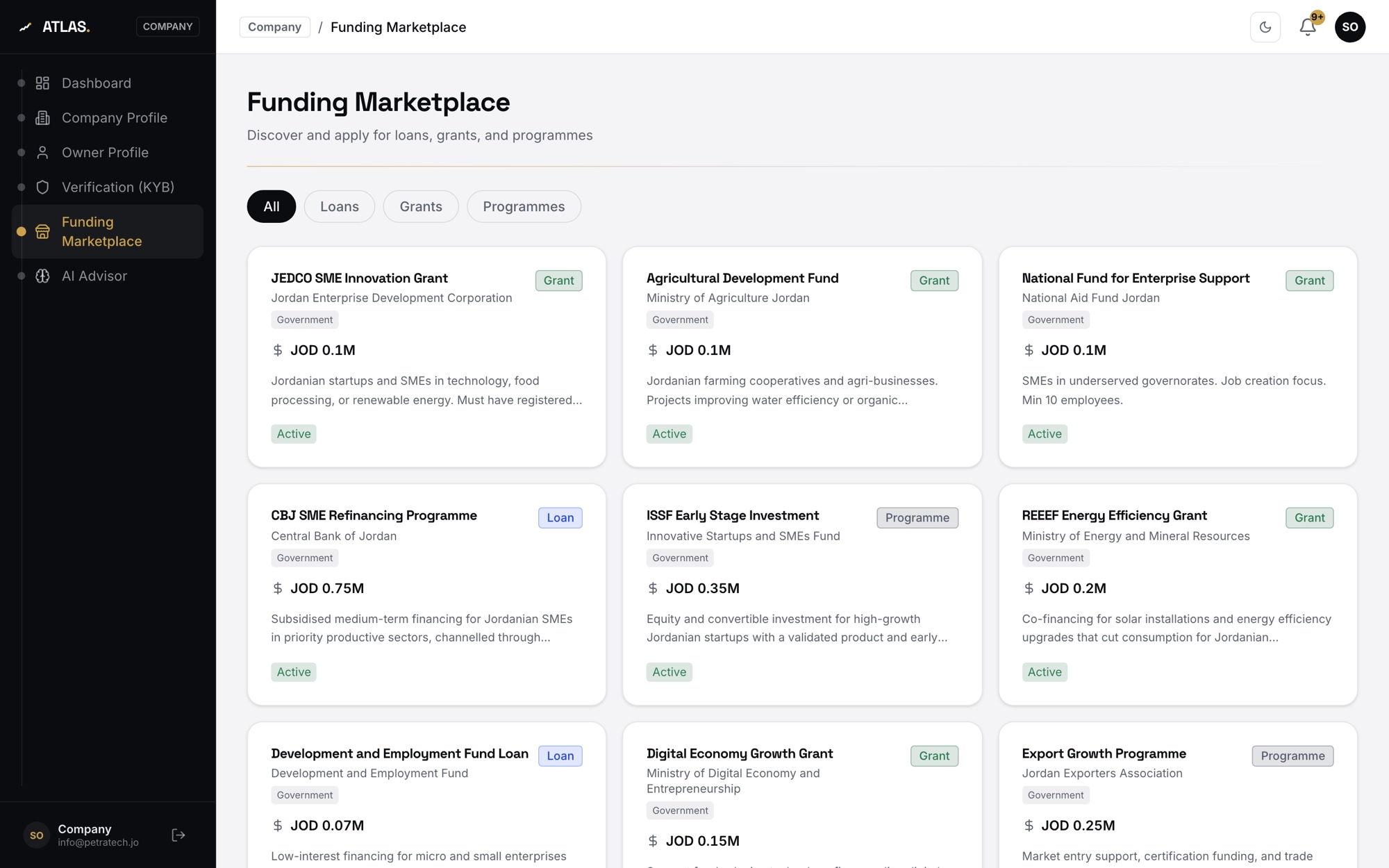
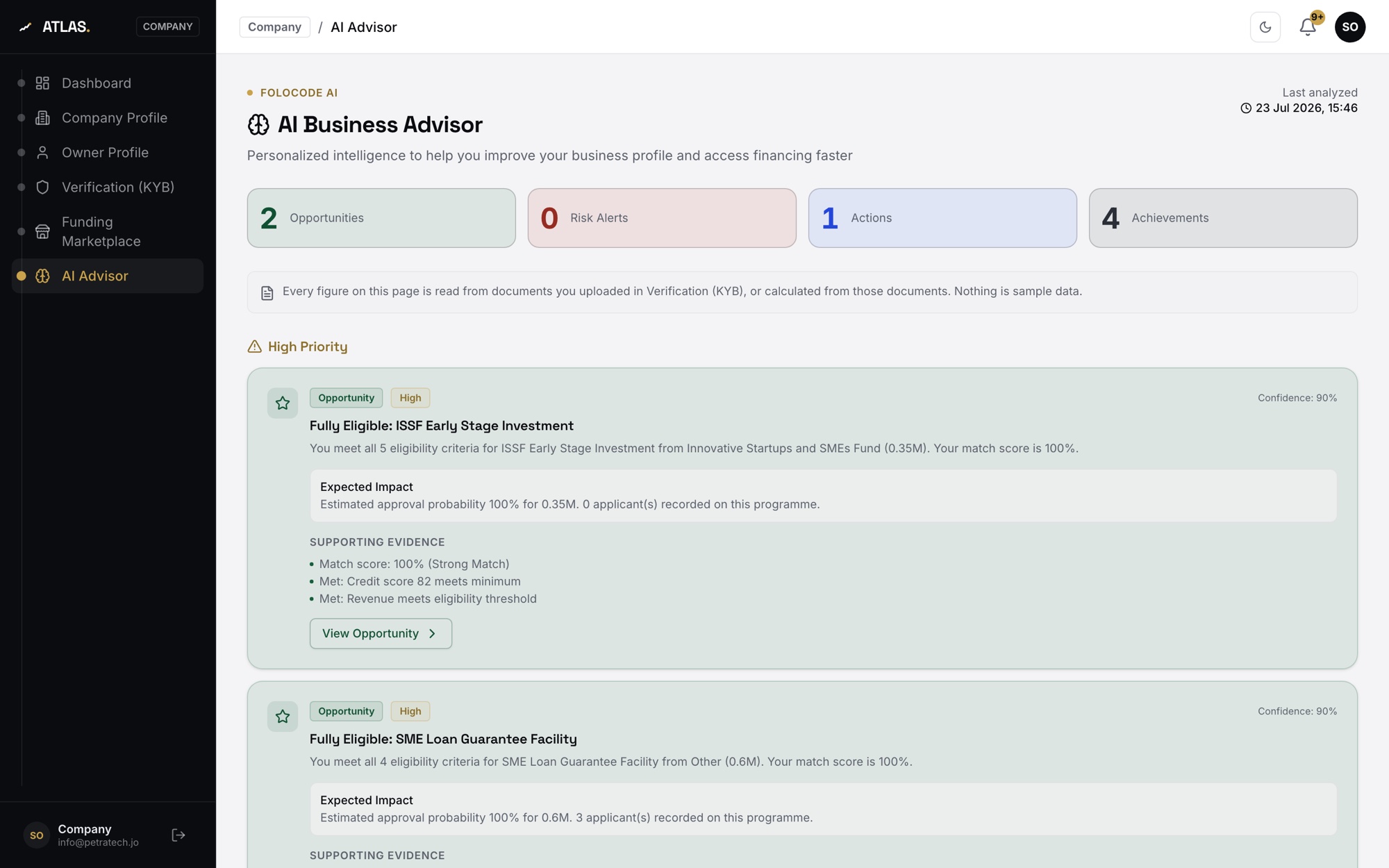
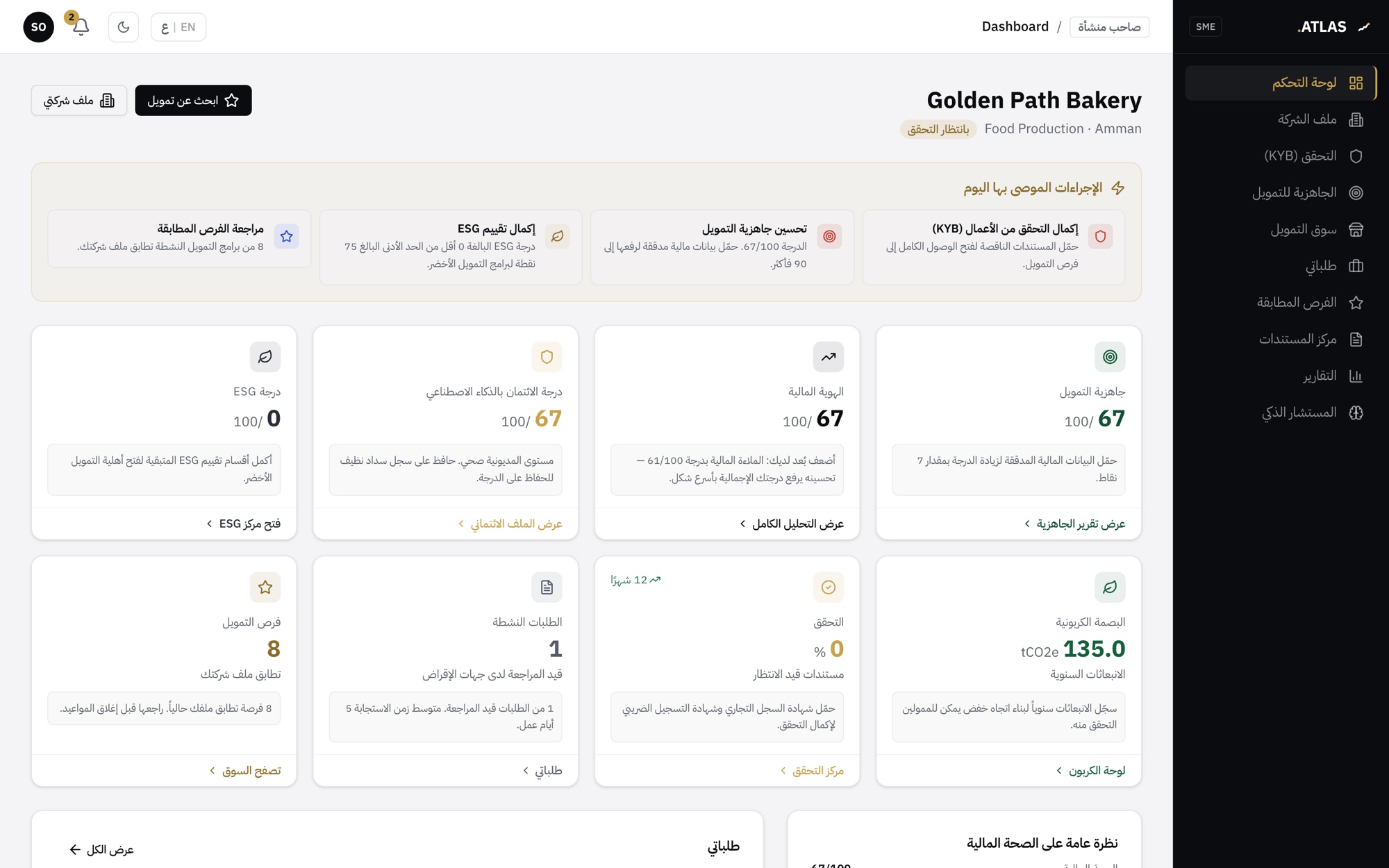
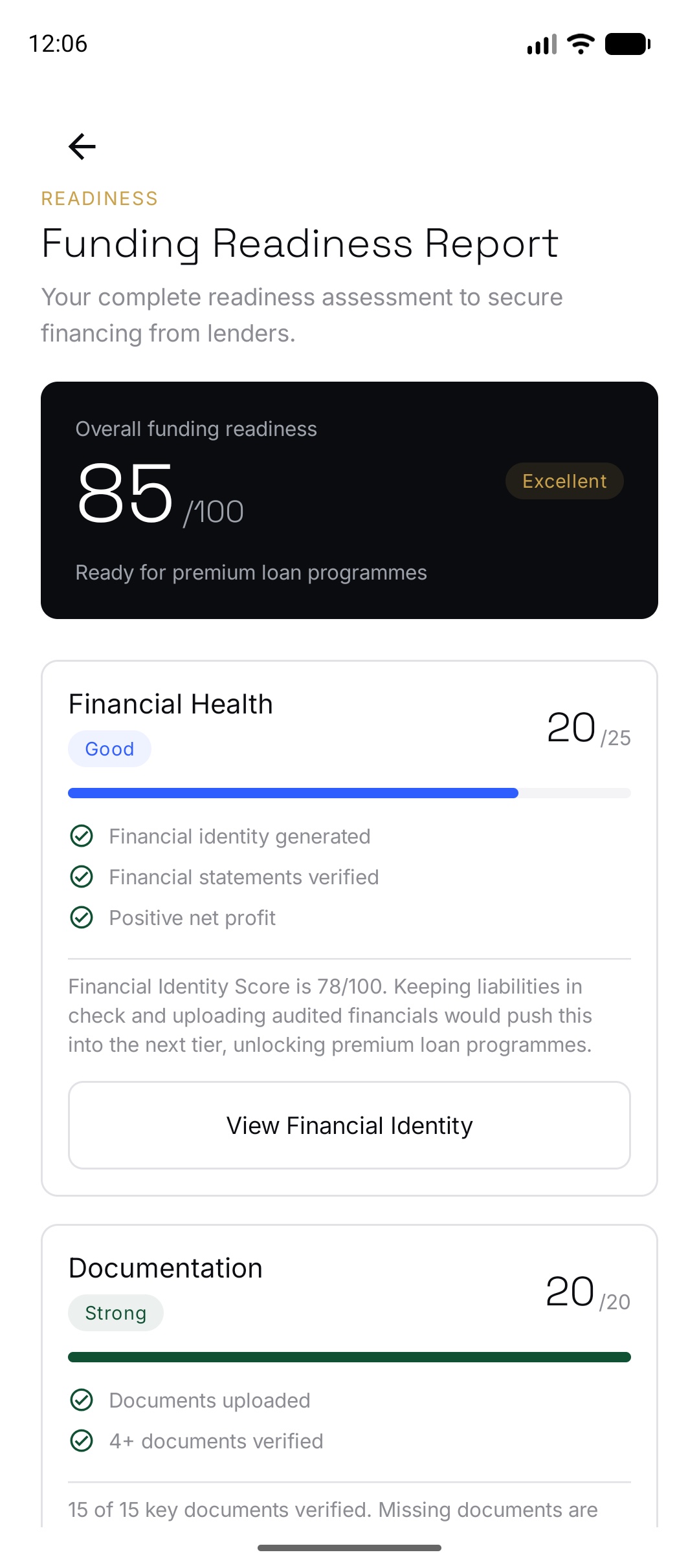
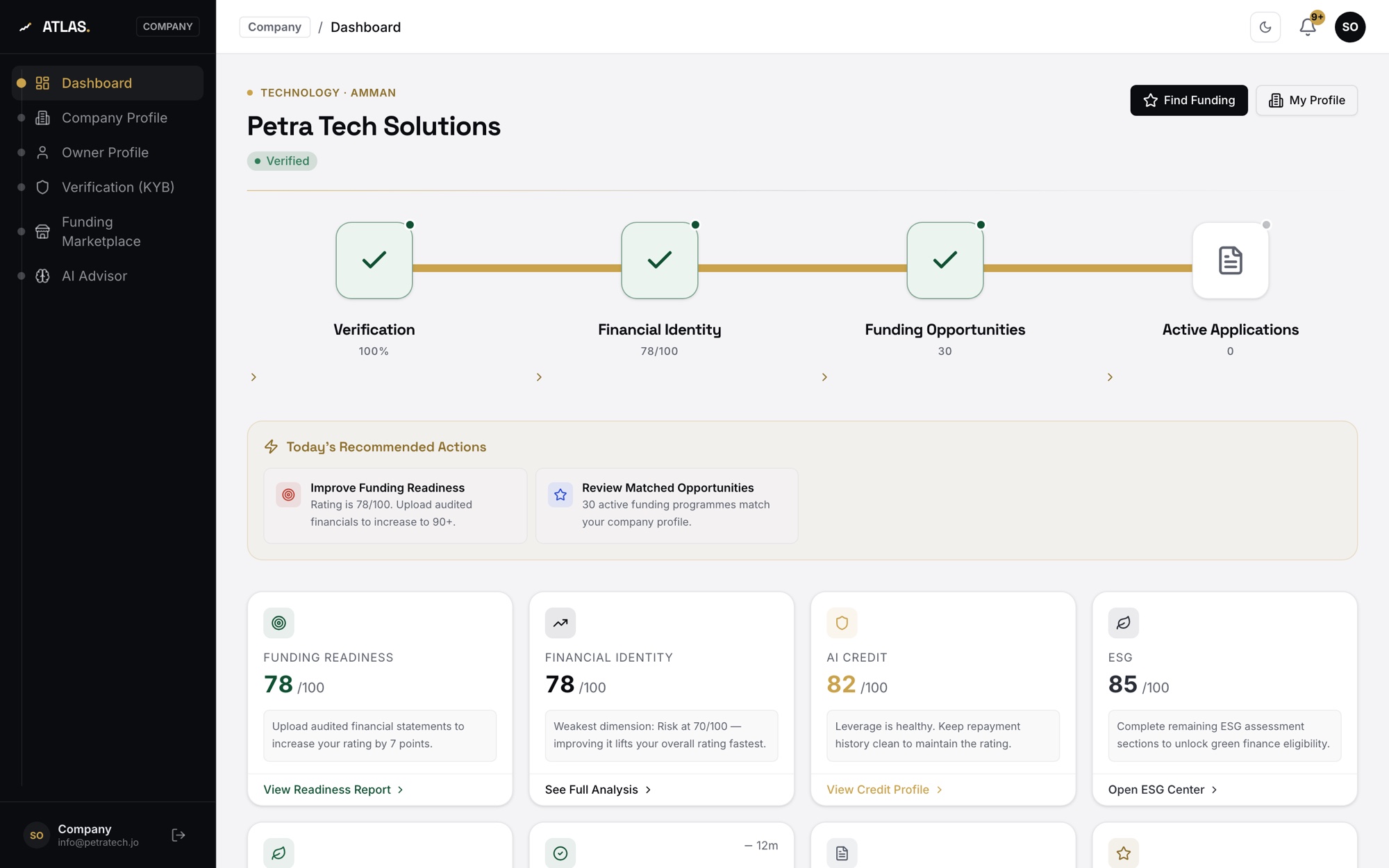
Atlas SME dashboard with KPI cards and recommended actions
01Hackathon team project · Android + Web

Atlas

Financial identity & funding platform for Jordanian SMEs

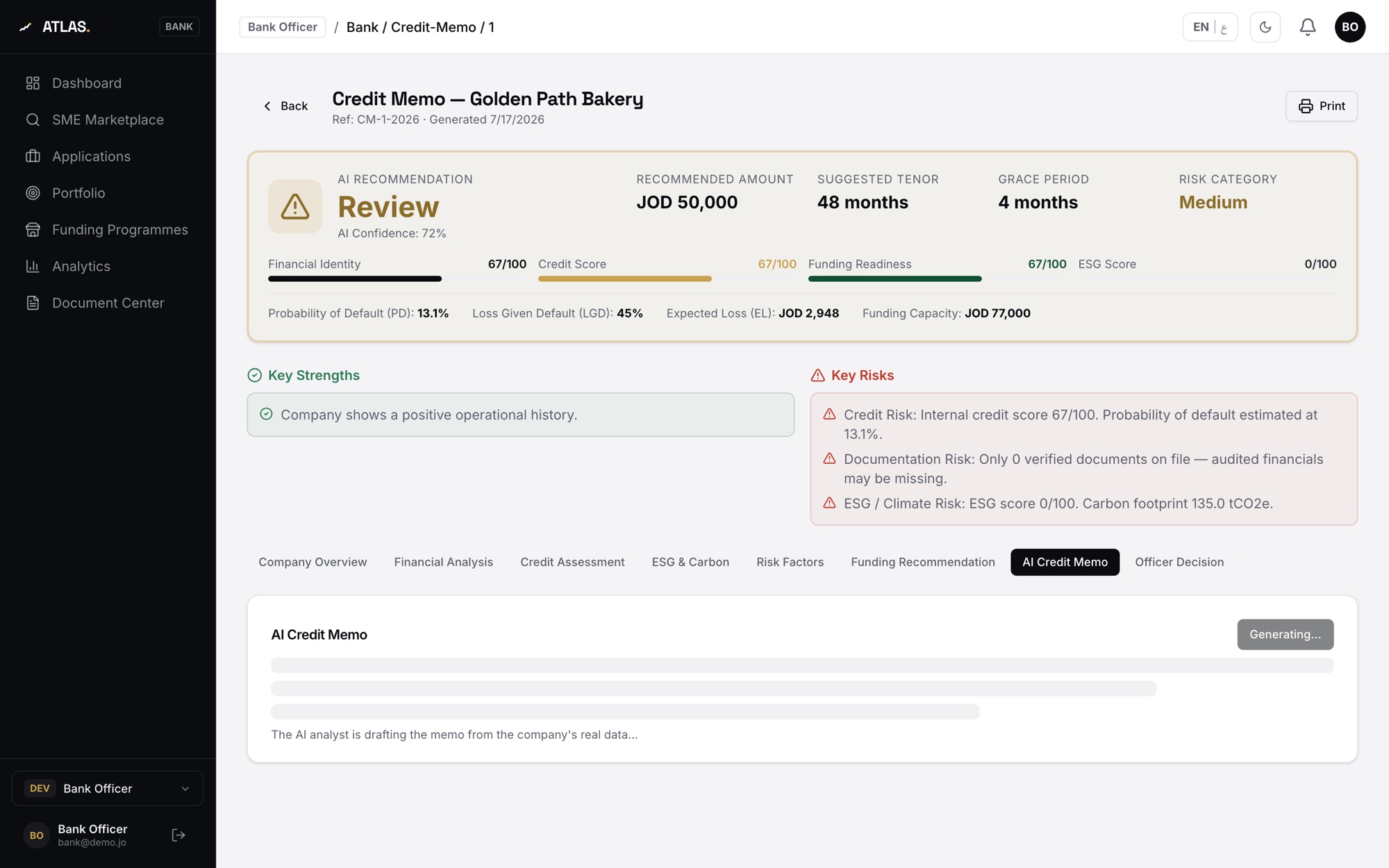
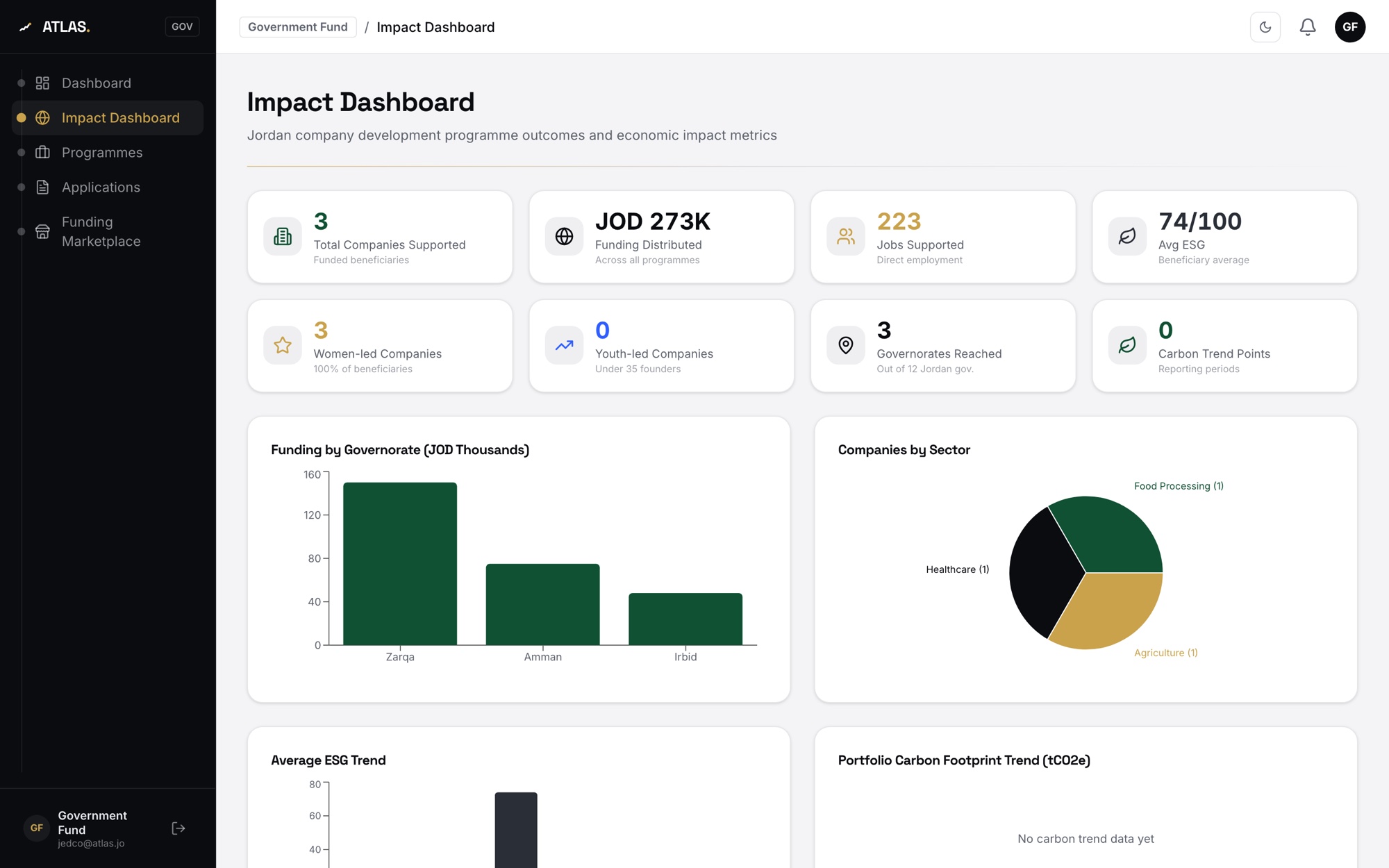
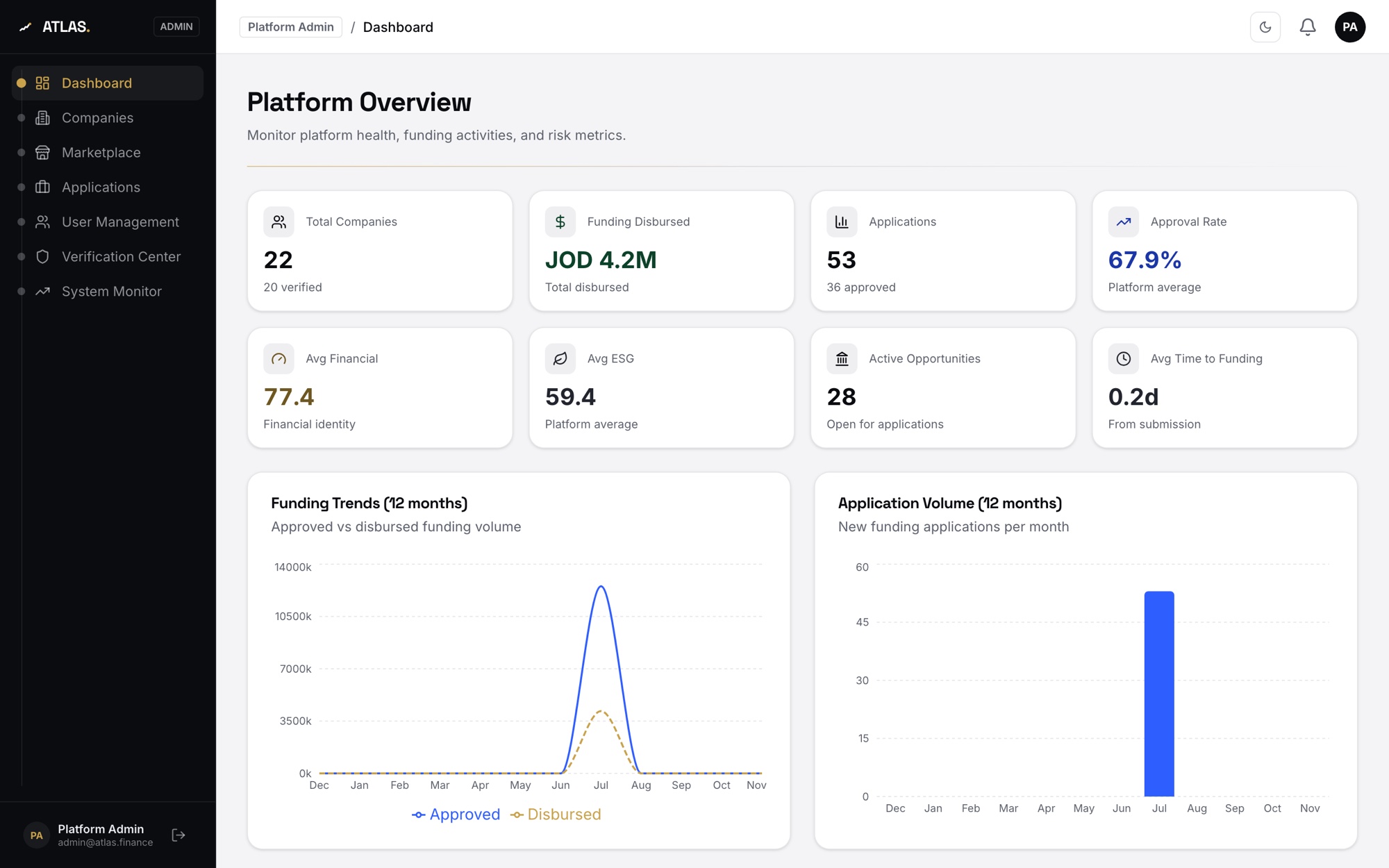
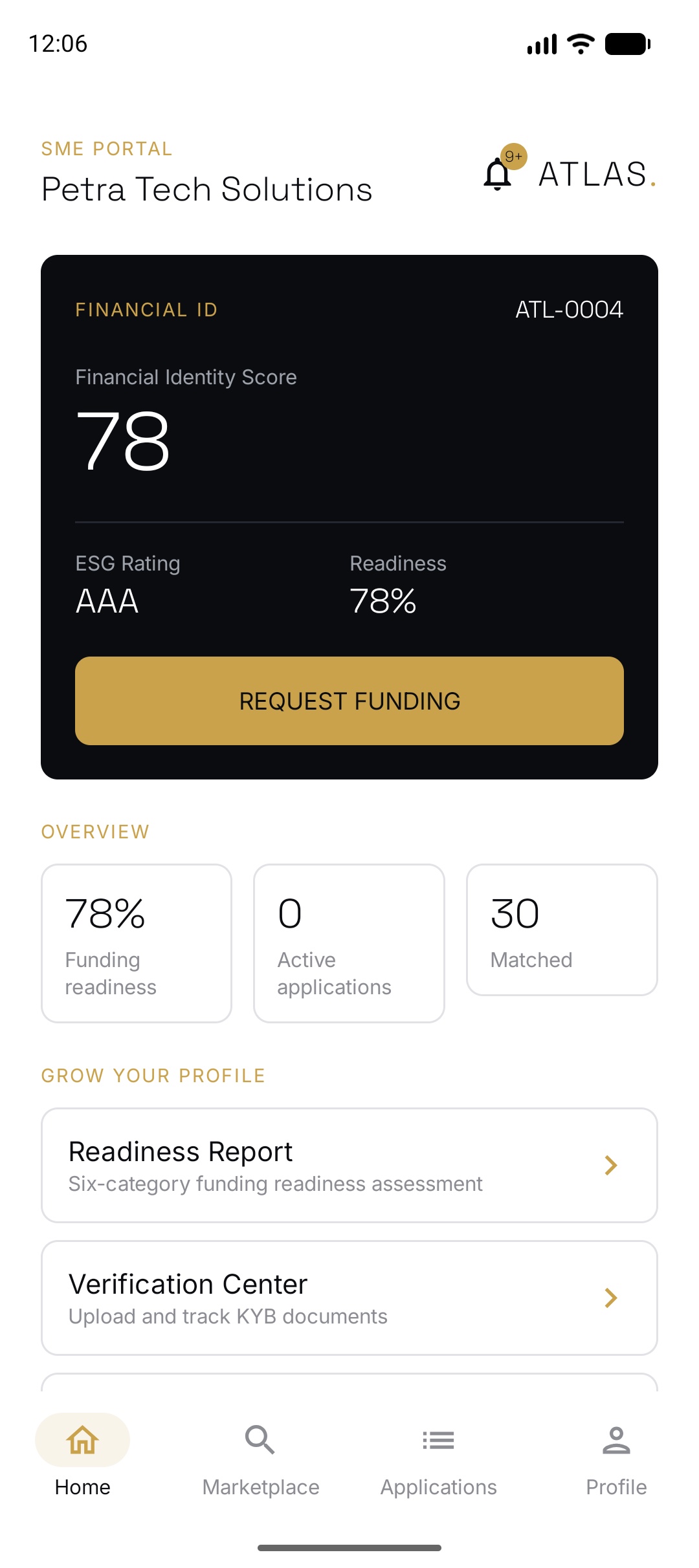
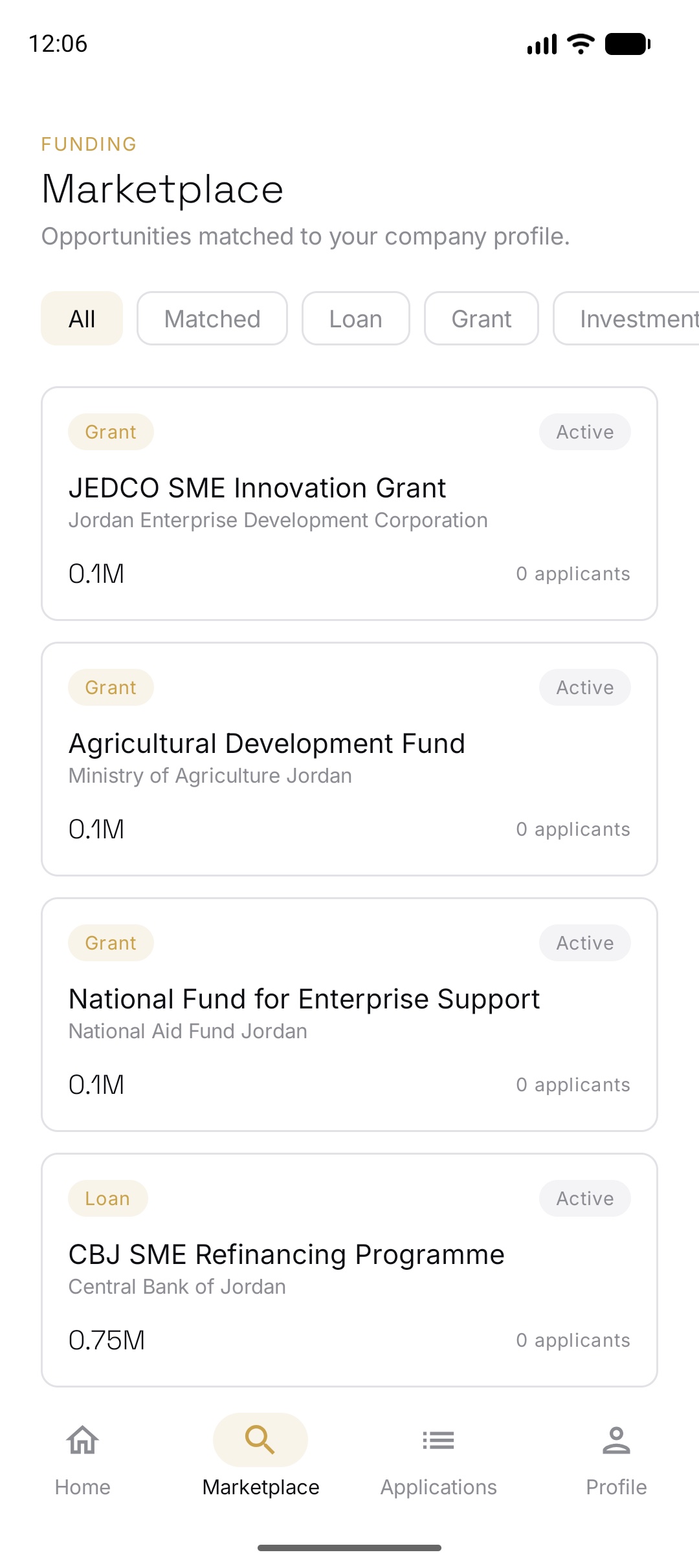
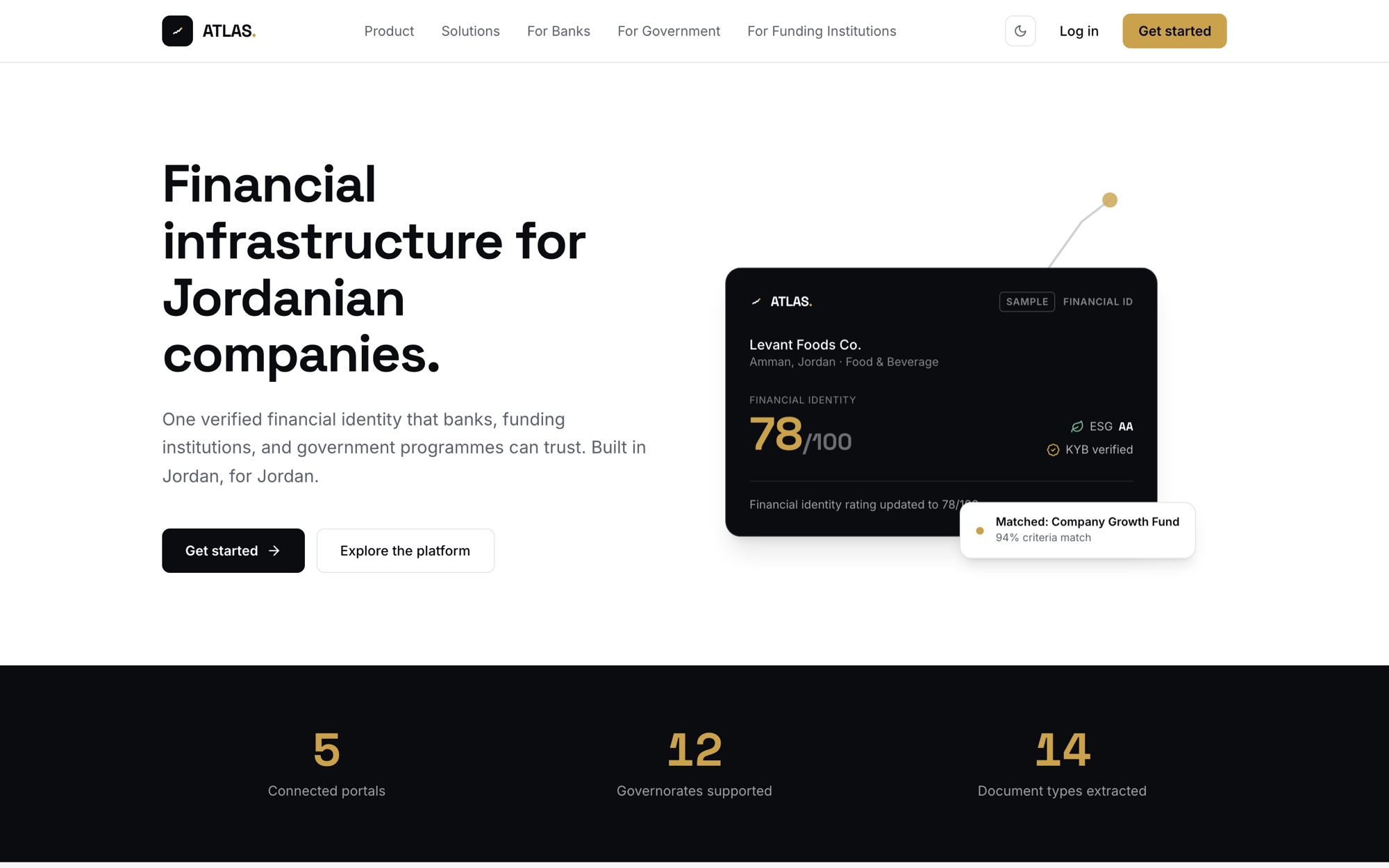
Atlas connects small businesses with banks, government funds and funding institutions. Companies build a financial identity (scores, ESG, carbon, KYB), and funders review applications with AI-written credit memos. Hackathon team project (JoPACC Fintech Rally 2026). As Lead Developer, I built the web and Android apps end to end, including a full Arabic RTL mode.

KotlinJetpack ComposeMaterial 3Dagger HiltRetrofitStateFlowReact 19TypeScriptViteTanStack QueryRechartsEN / AR + RTL

The problem

Small businesses in Jordan struggle to prove that they can be funded, and funders have no shared view of their finances. Atlas gives both sides one platform: companies build a verifiable financial profile, and banks and funds find, assess and fund them.

My role

Lead Developer in a hackathon team: I built the web and Android apps end to end, and integrated the AI features (credit memos, insights, advisor) into both clients. The backend and AI services were built with my teammates. Both clients run against the same Atlas REST API, and the role in the user's JWT decides which portal they see: Company, Bank, Government Fund, Funding Institution or Platform Admin.

How it's put together

  • Android: Compose + Material 3, MVVM with data, domain and presentation layers, Hilt, and Retrofit/OkHttp with an auth interceptor.
  • Web: React 19 + TypeScript on Vite, TanStack Query hooks per endpoint, Radix/shadcn-style components, and Recharts.
  • A shared design system across both clients: ink, gold and emerald tokens, with Space Grotesk and Inter type.

Key engineering decisions

  • The backend base URL is a buildConfigField, so debug builds can target a local API on a real device with no code change.
  • RTL is built with CSS logical properties instead of per-component flips, so all of Arabic works from a single switch.
  • AI insight appears next to deterministic scores and never replaces them, so the numbers stay explainable.
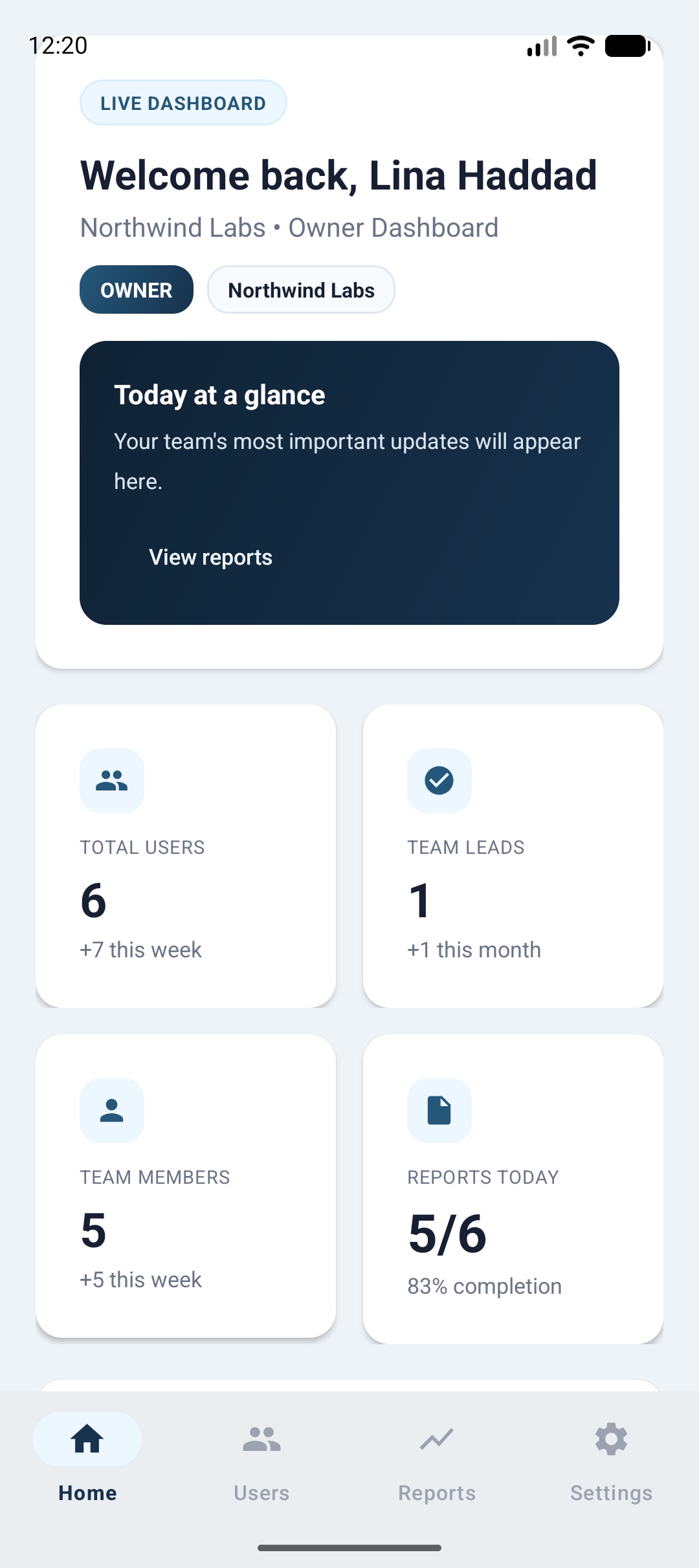
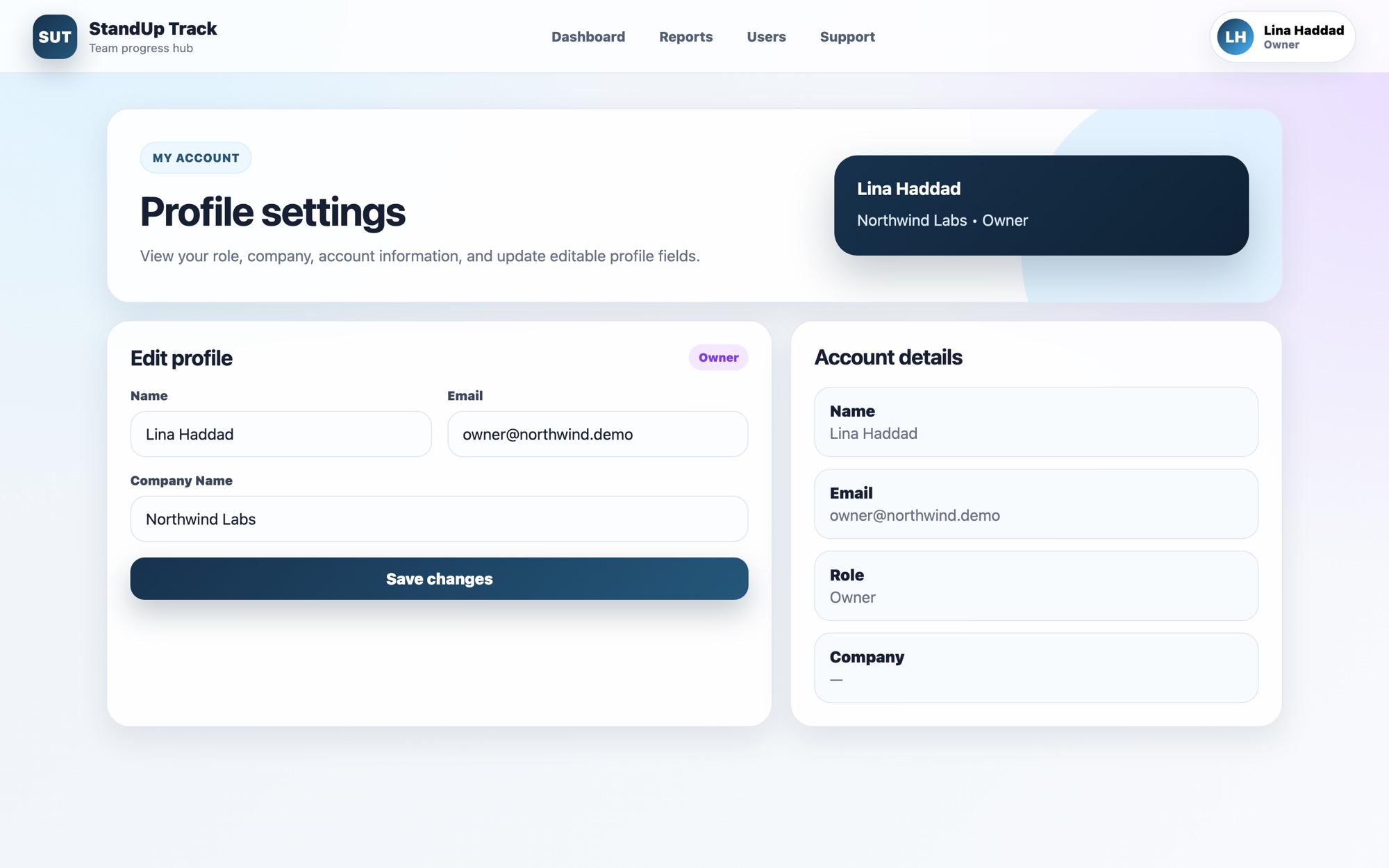
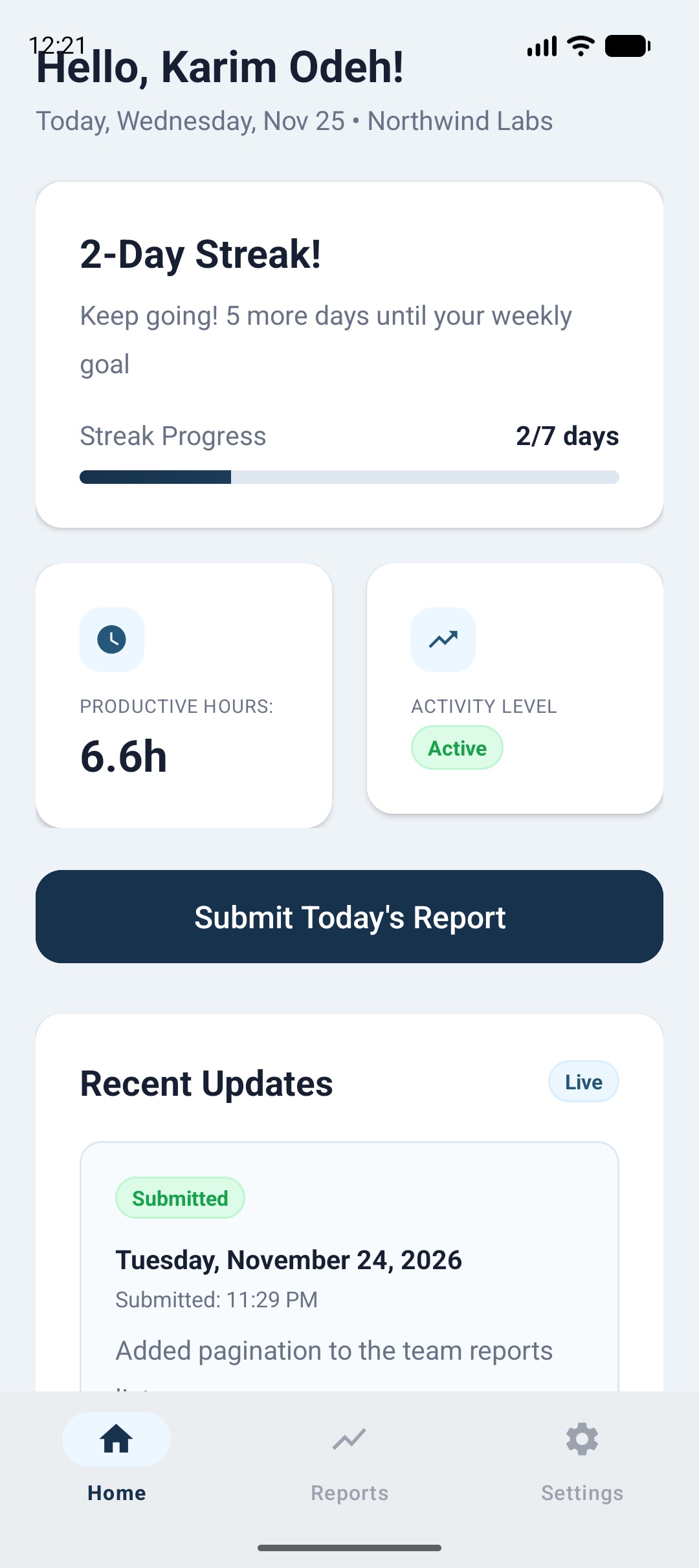
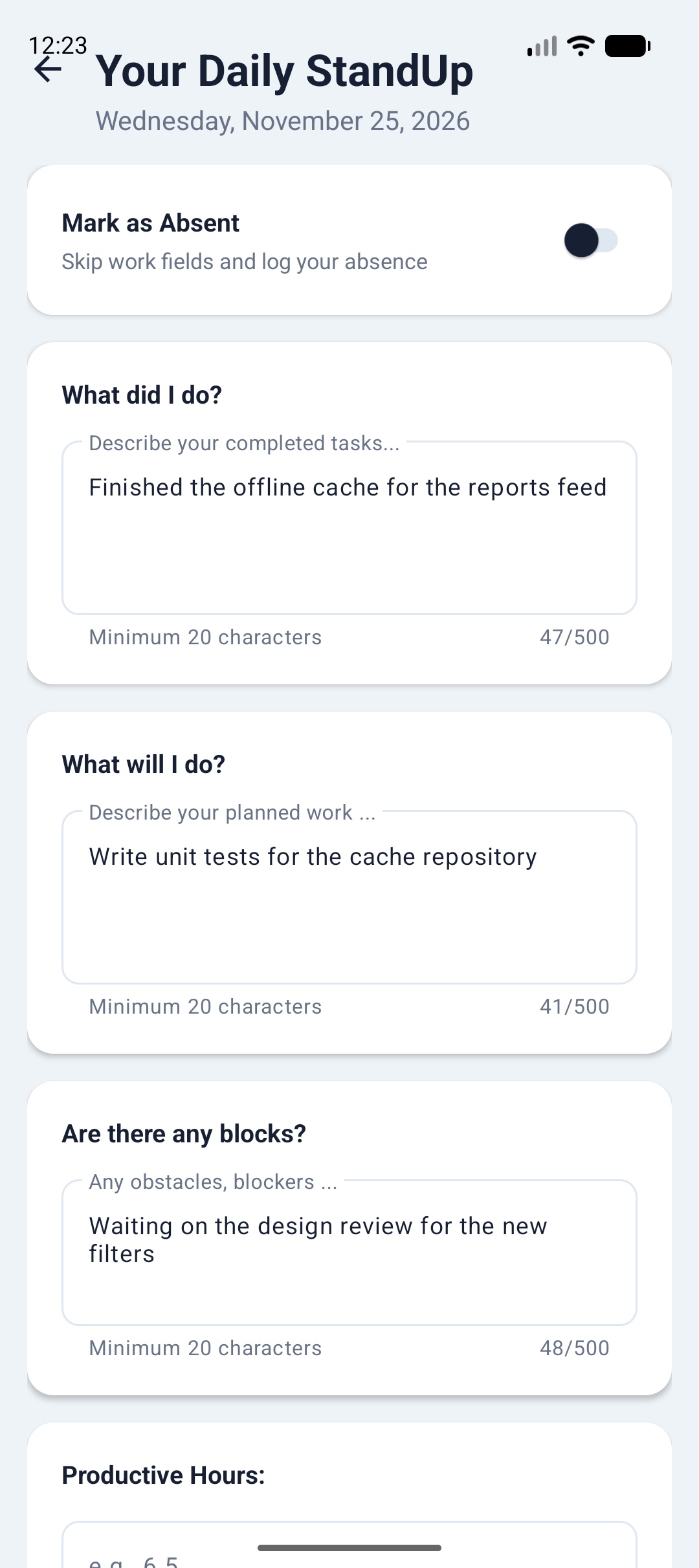
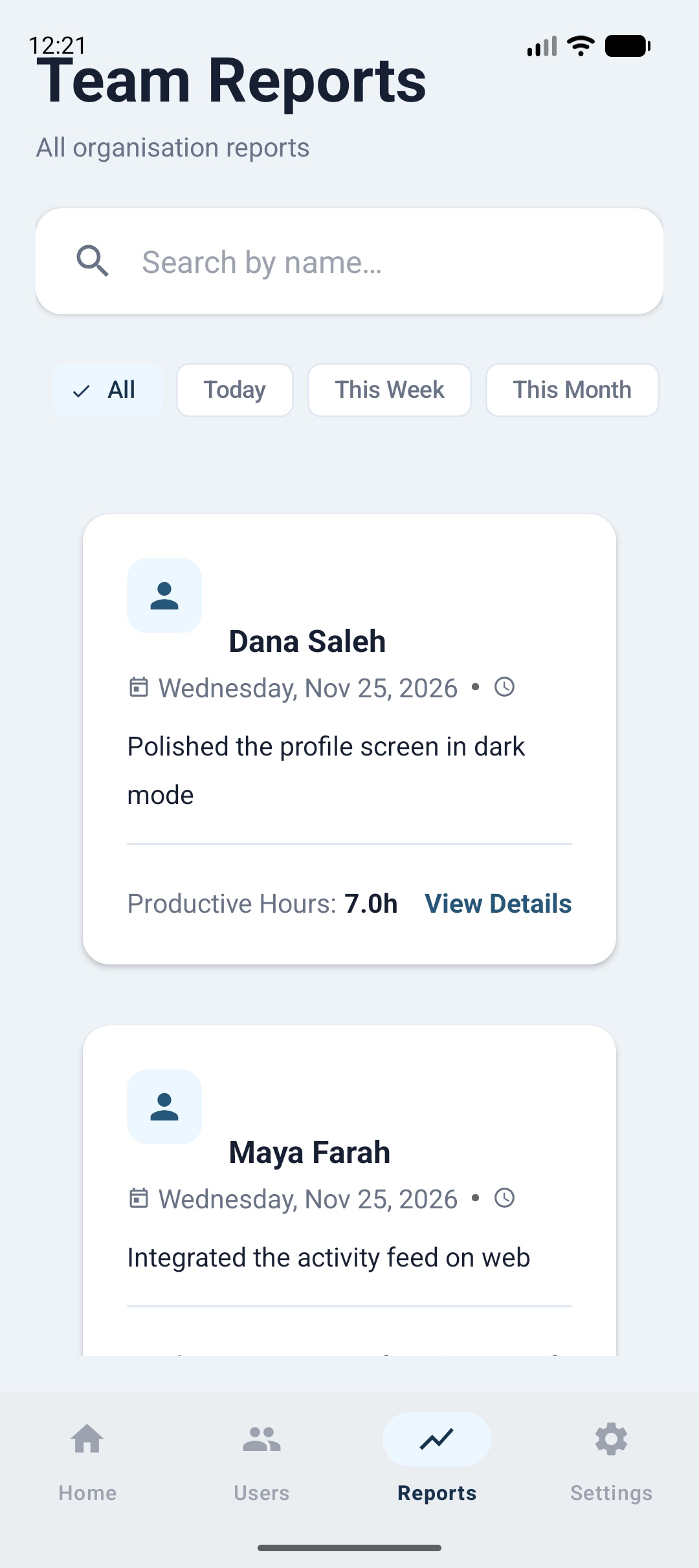
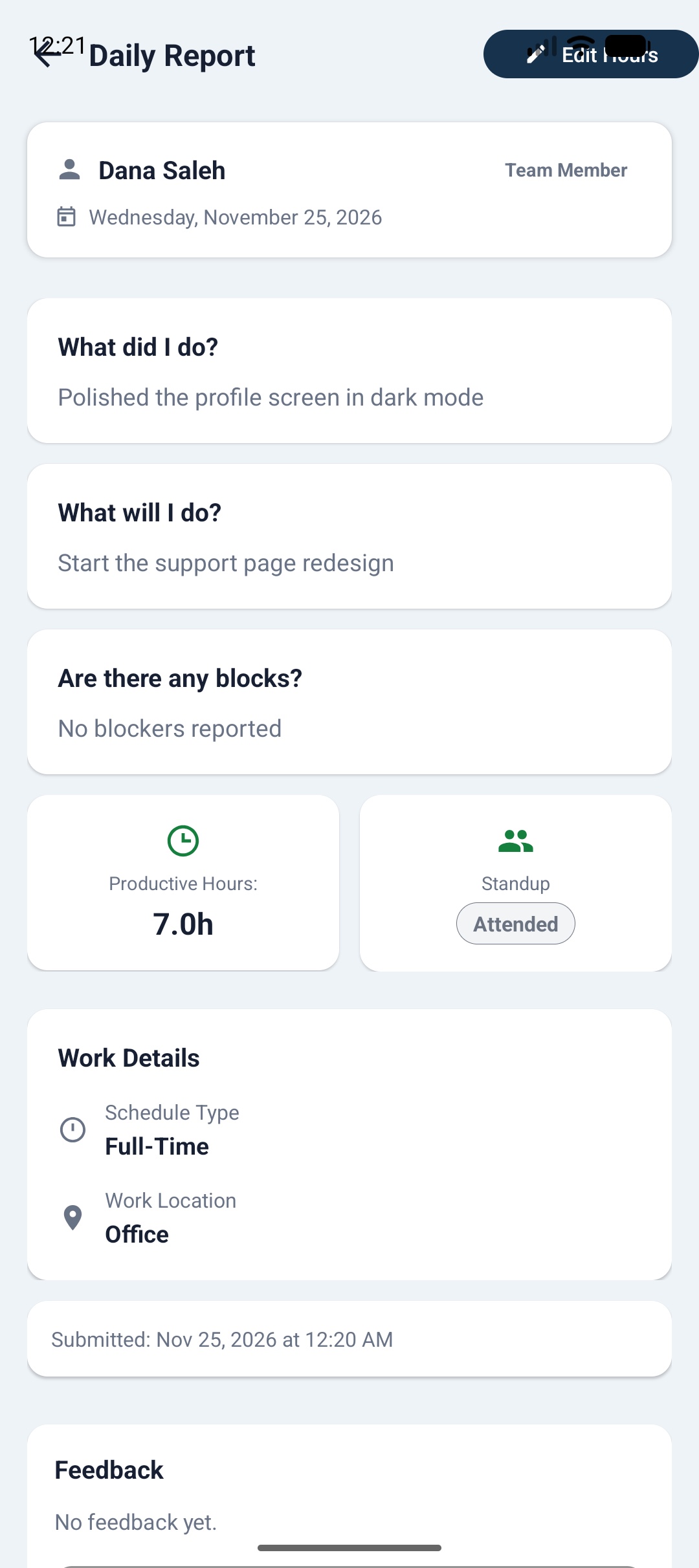
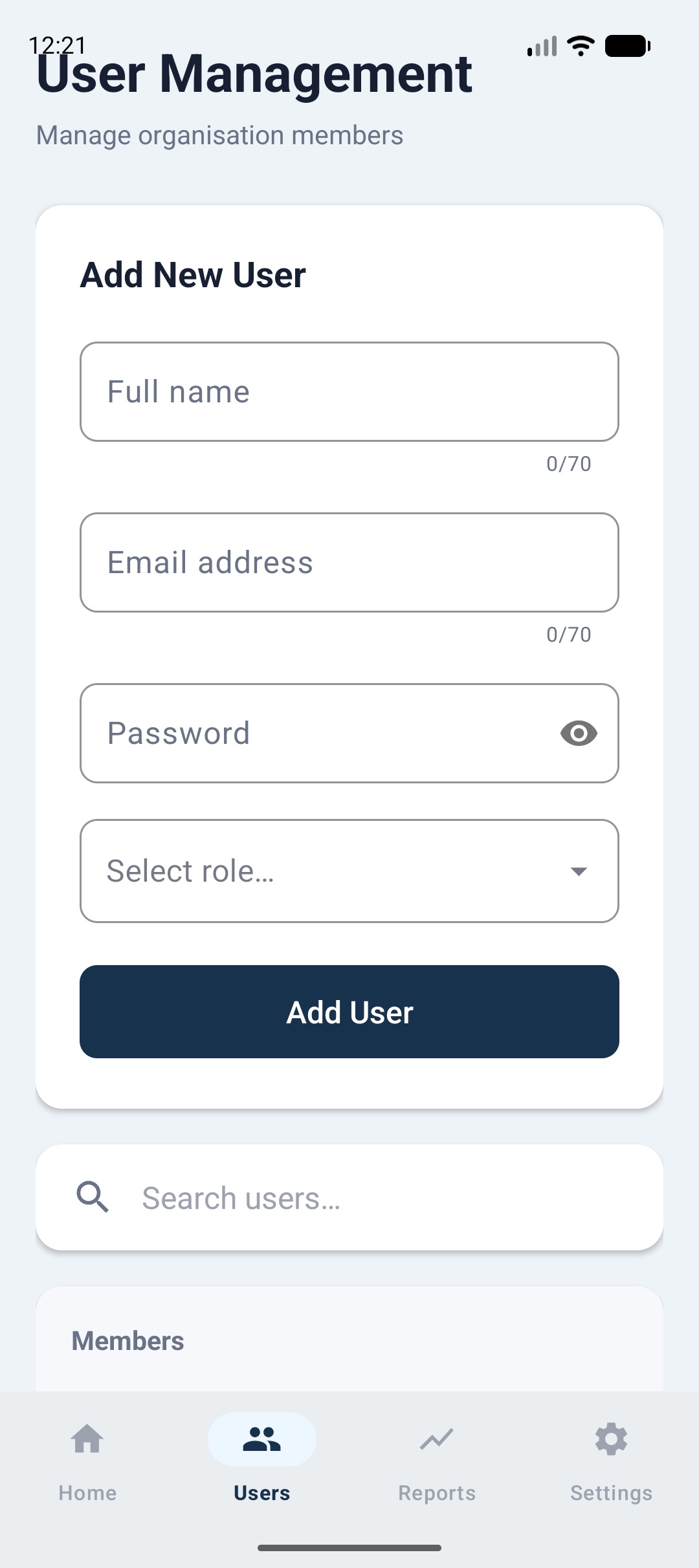
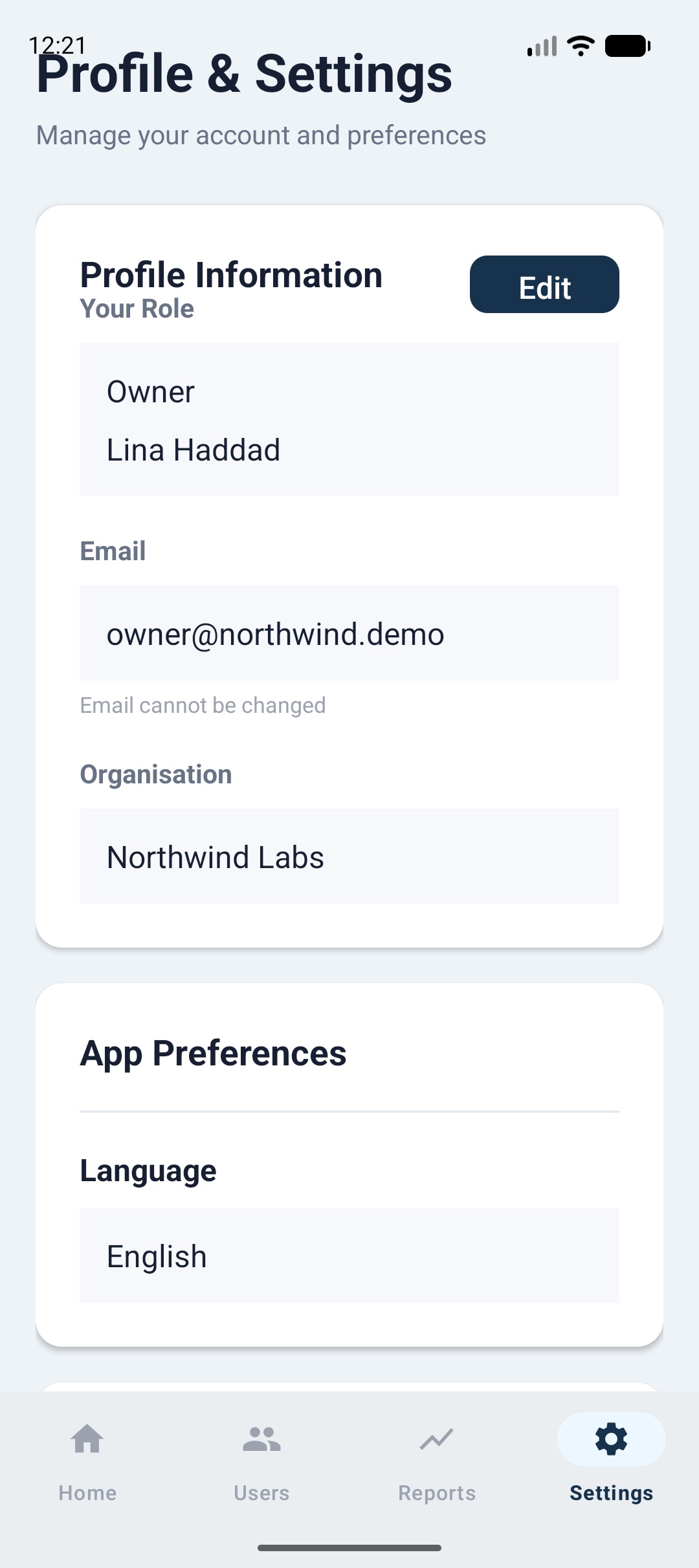
StandUp Track Android owner dashboard with team and report stats
02Android app + Web dashboard

StandUp Track

Daily standup reporting for teams

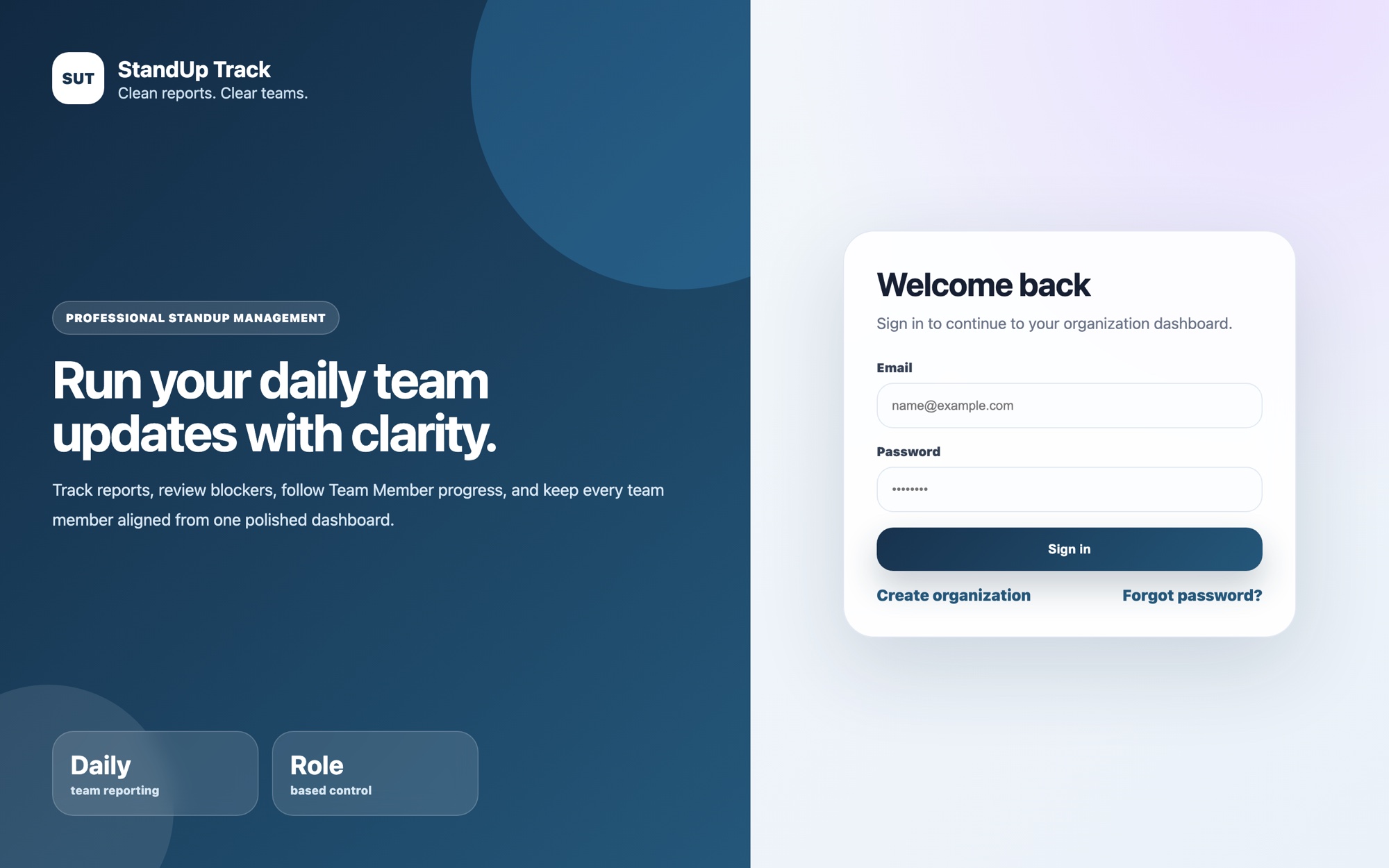
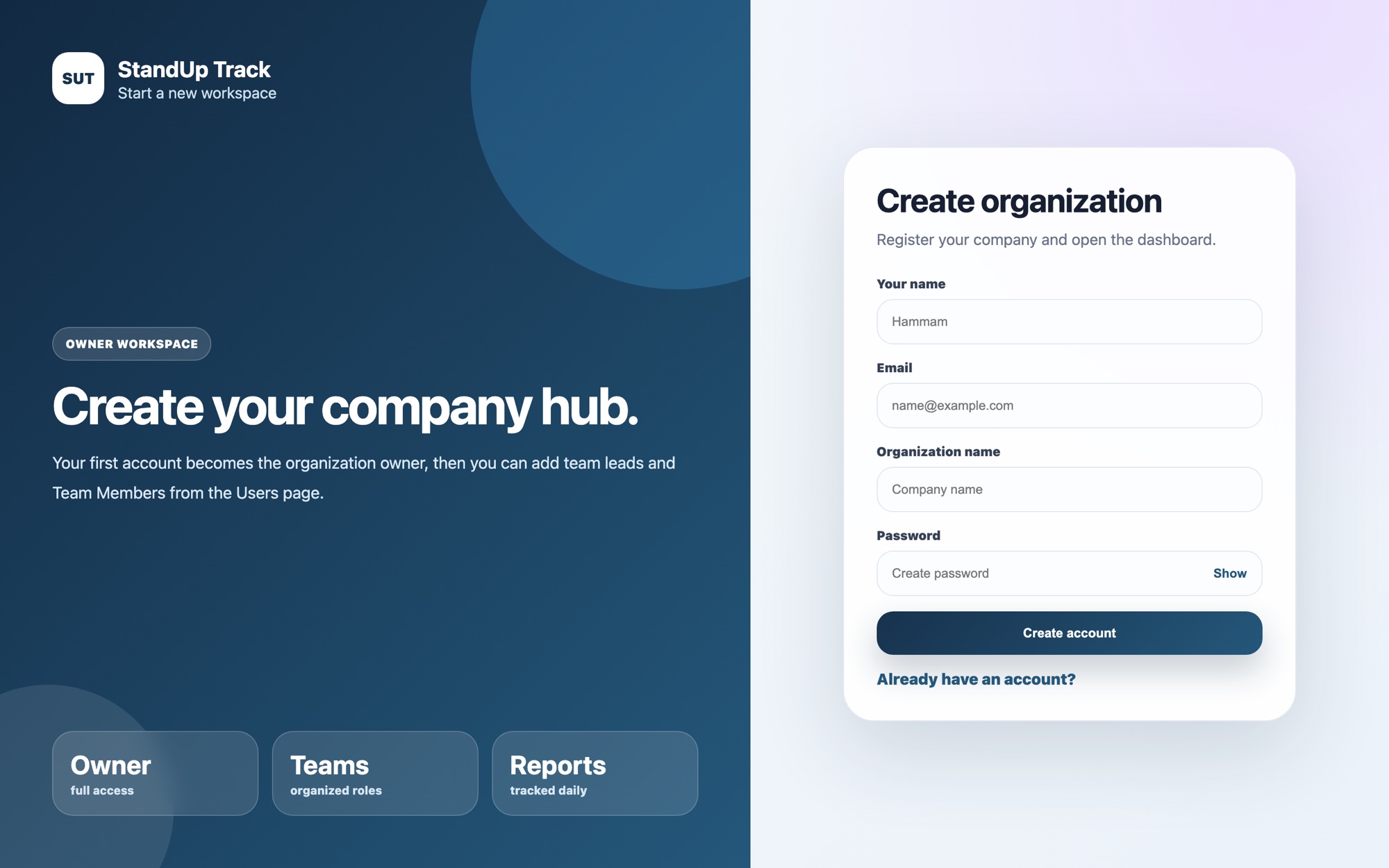
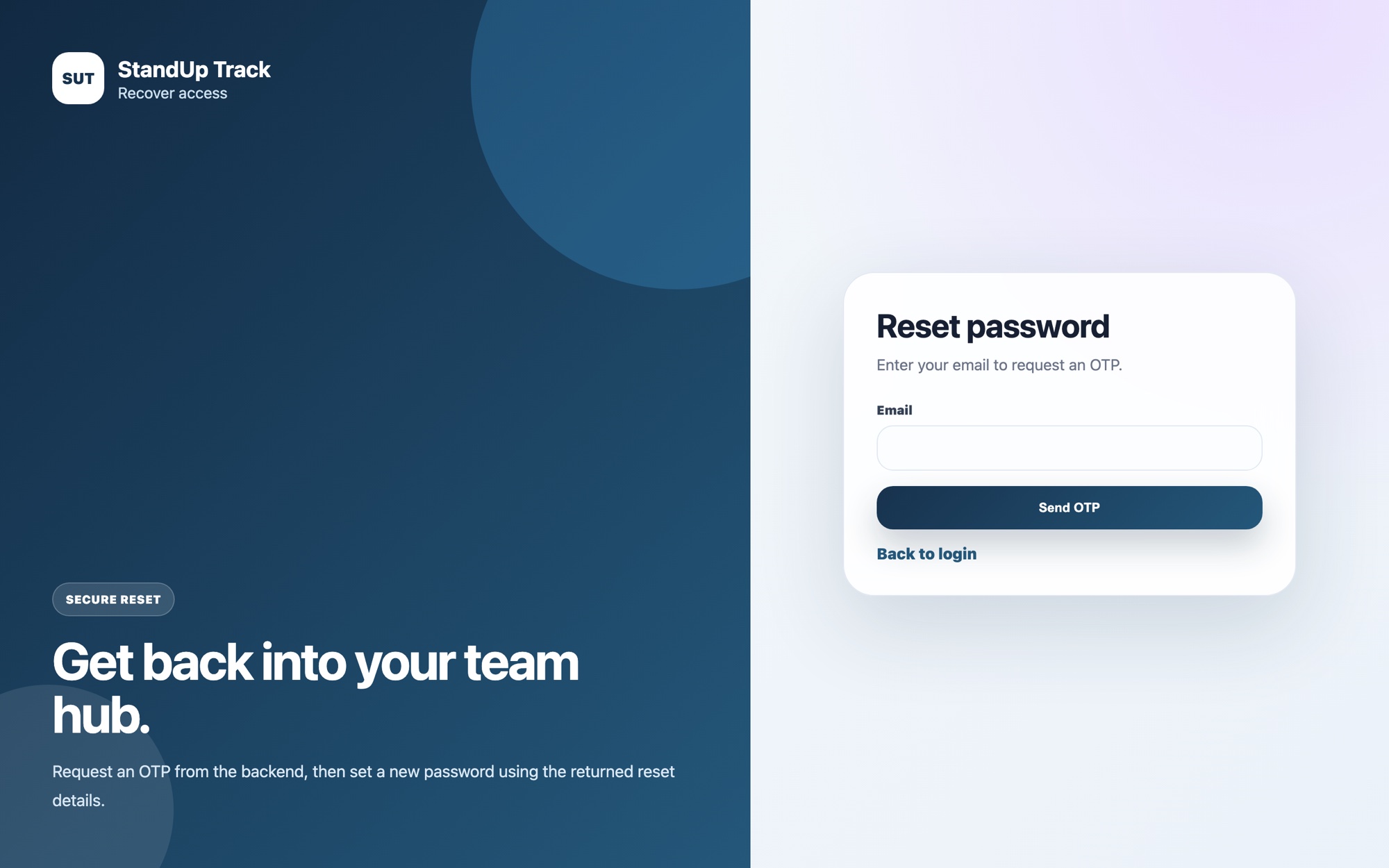
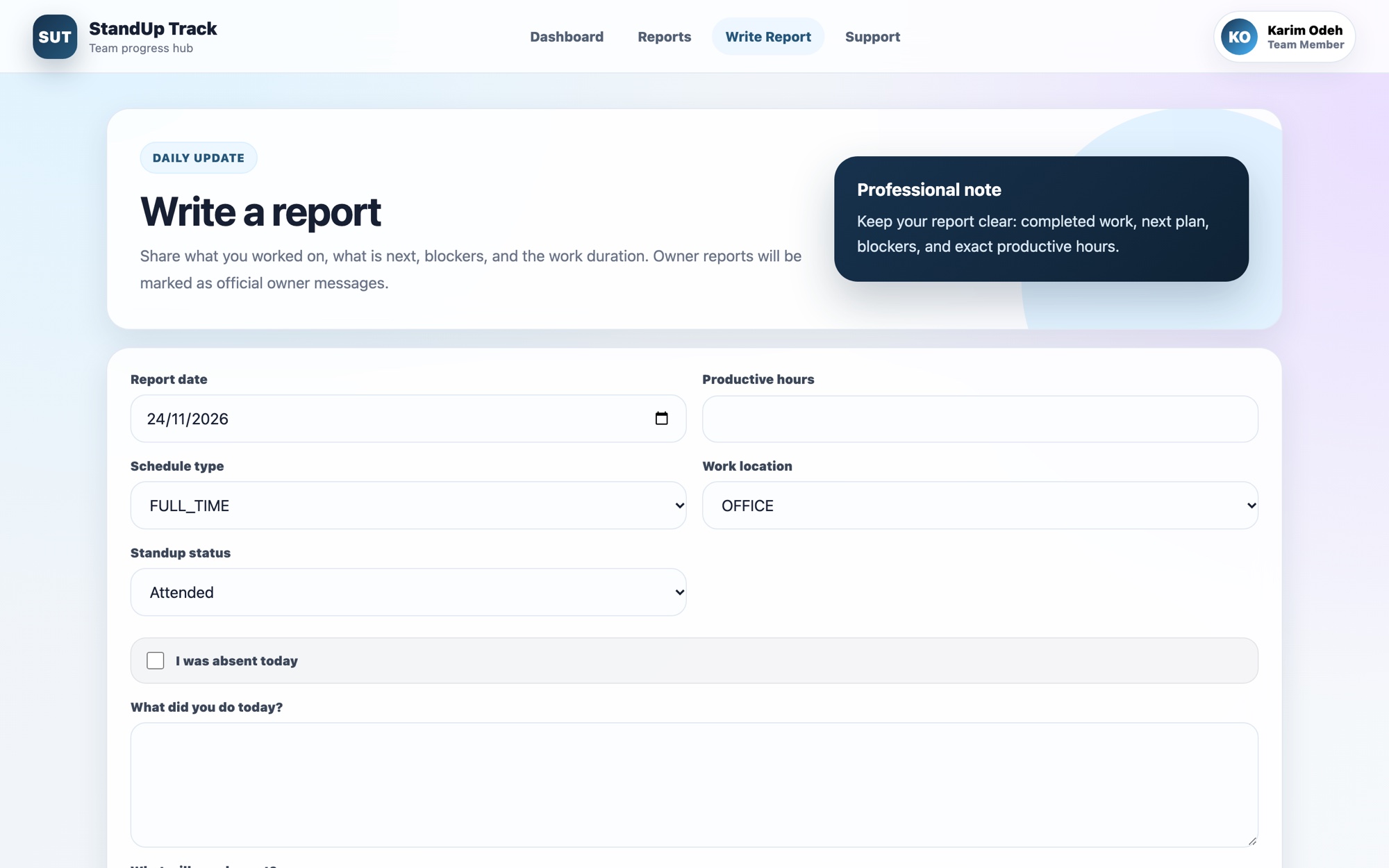
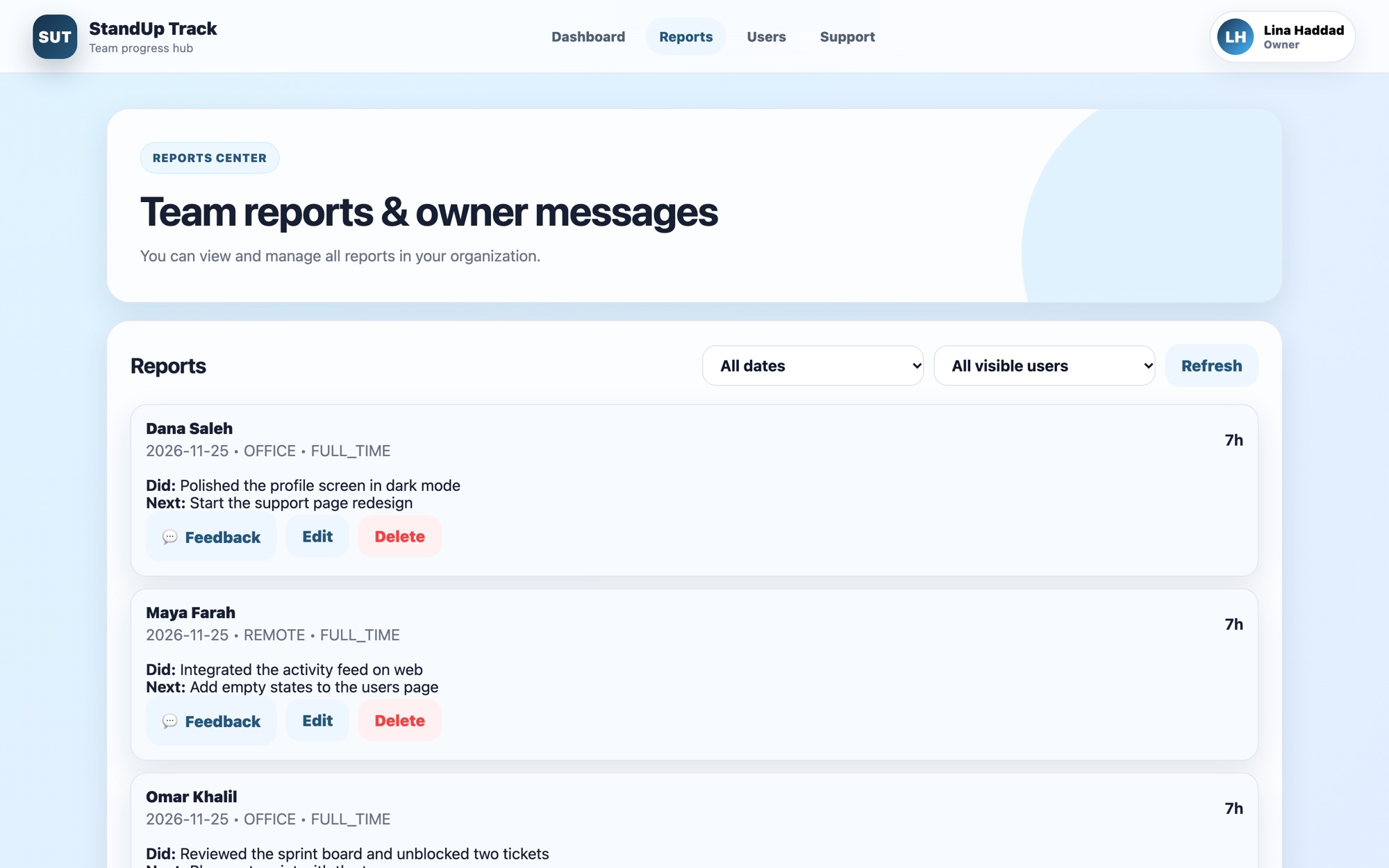
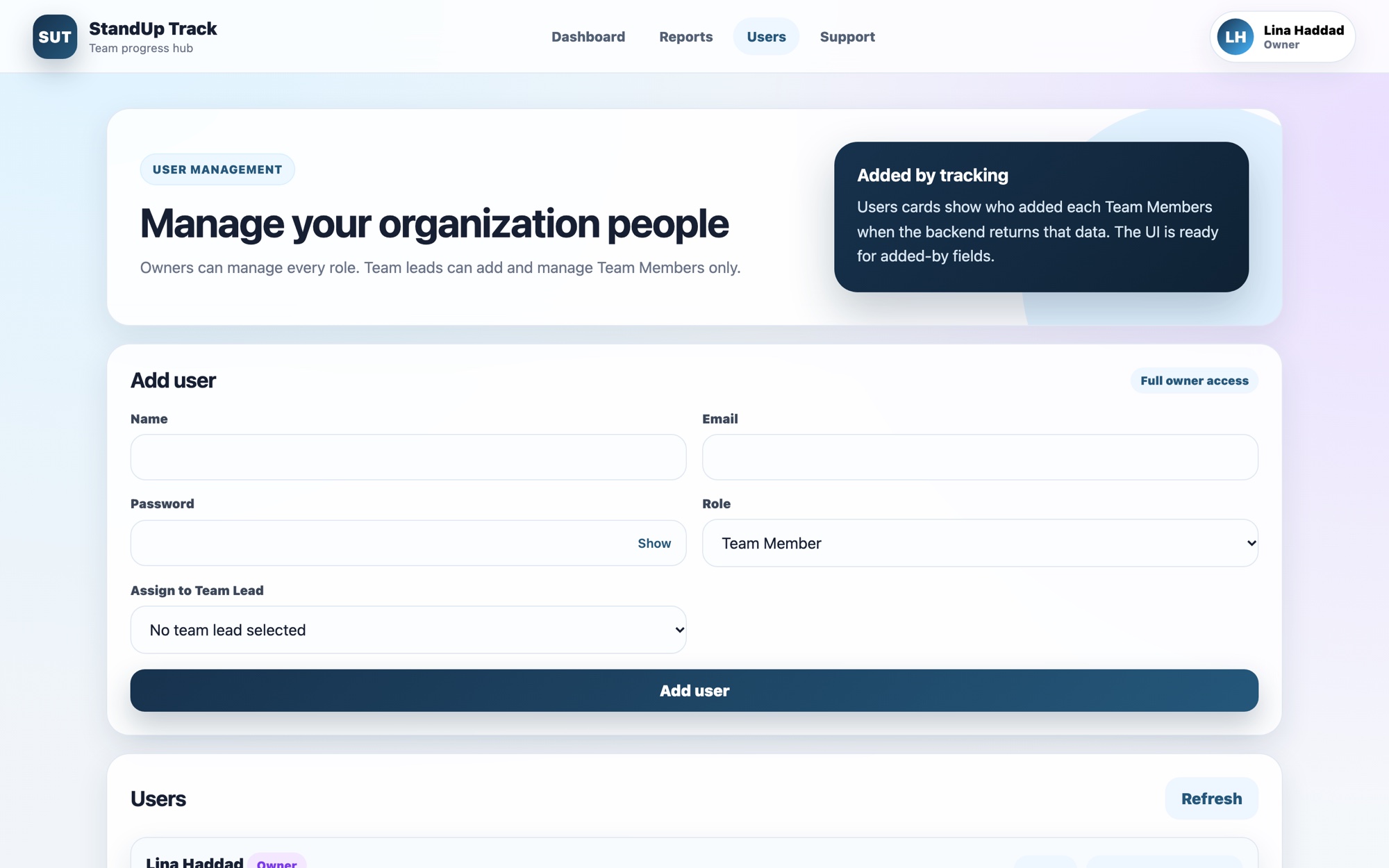
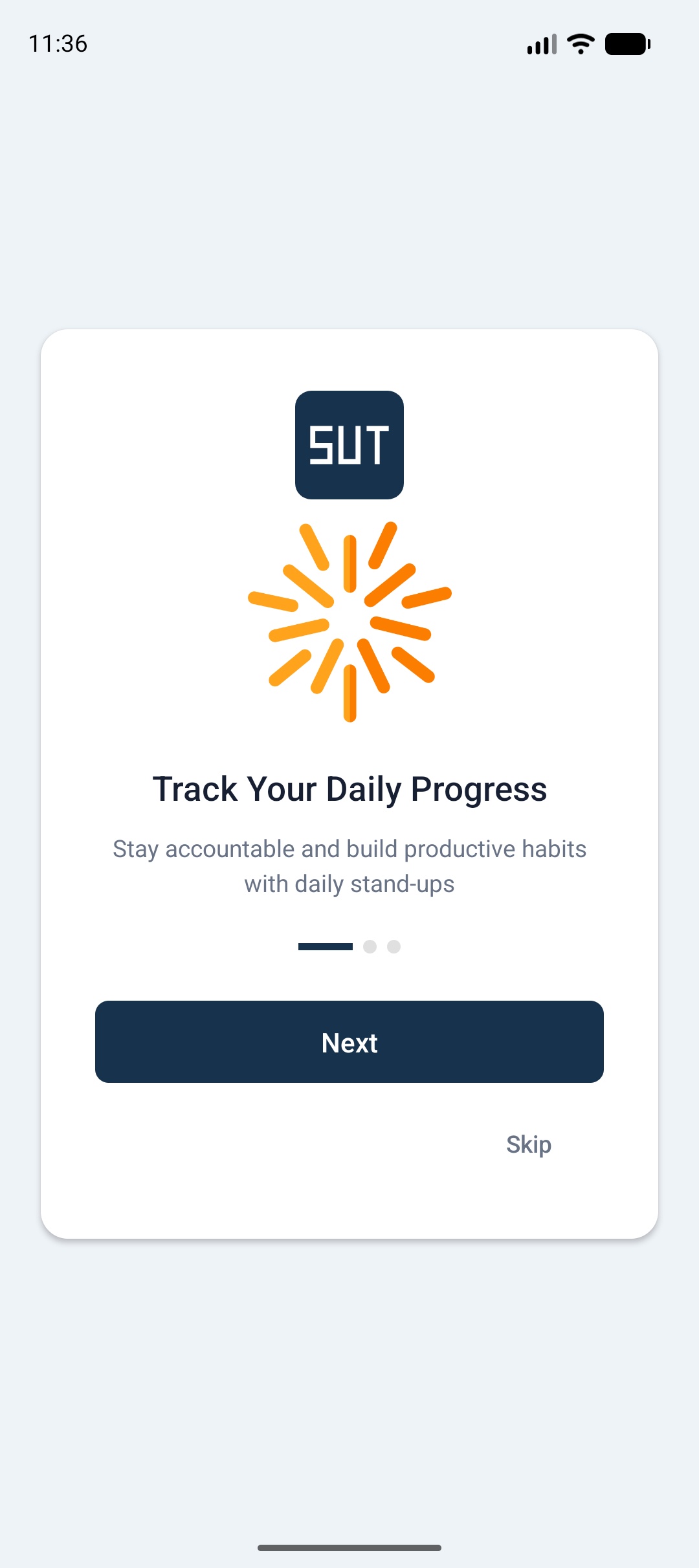
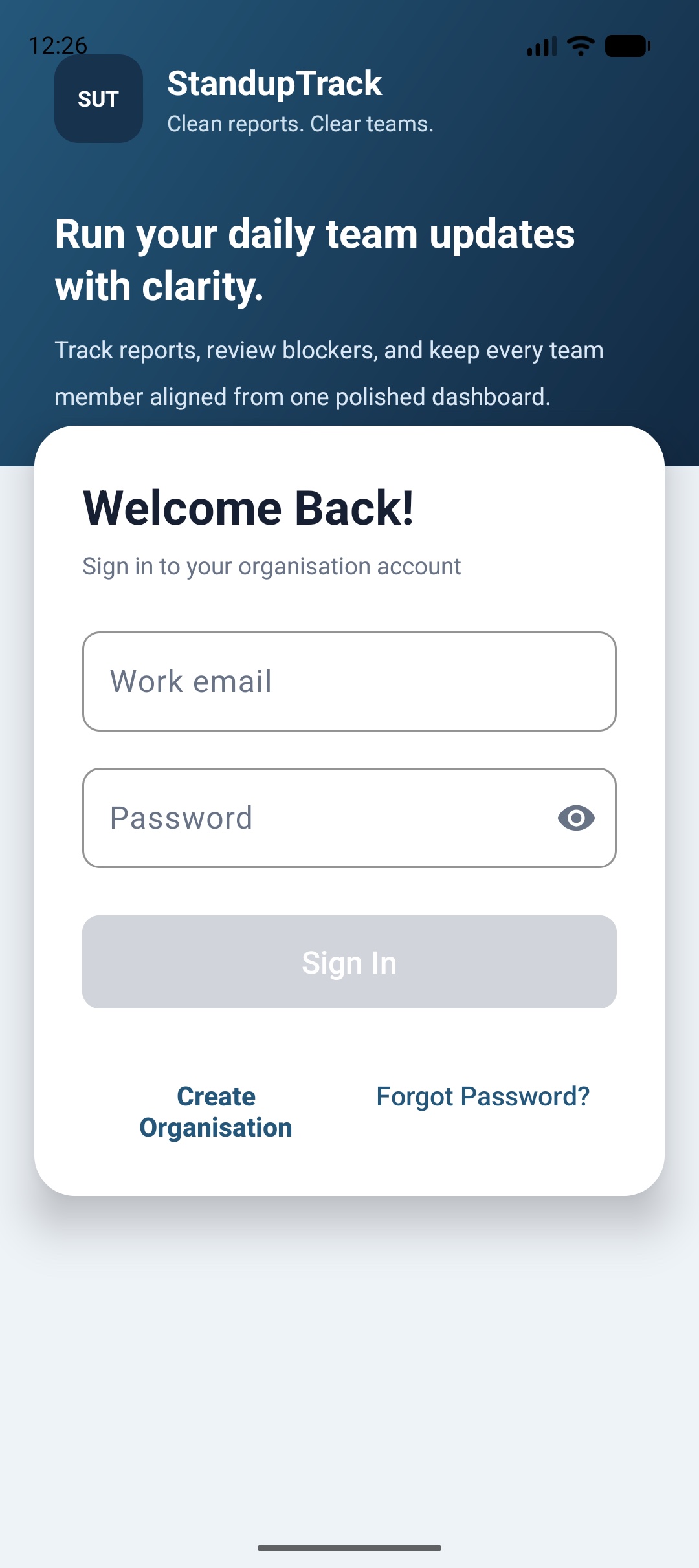
Team members submit daily standup reports, and managers read, reply to and track them. An organization signs up, invites its users, and everyone follows progress from the Android app or the web dashboard. Both talk to the same Ktor + PostgreSQL backend.

KotlinMVVMDagger HiltRetrofitCoroutinesNavigation ComponentDataStoreFirebase Cloud MessagingExposedJWT authKtorPostgreSQLHTML / CSS / JS

The problem

Standups held over chat get lost, and managers can't see who reported, what is blocked, or what was replied to. StandUp Track gives every report a structure and a history.

What it does

  • Organization sign-up, login and password reset.
  • Write a daily report, then browse the reports feed with replies.
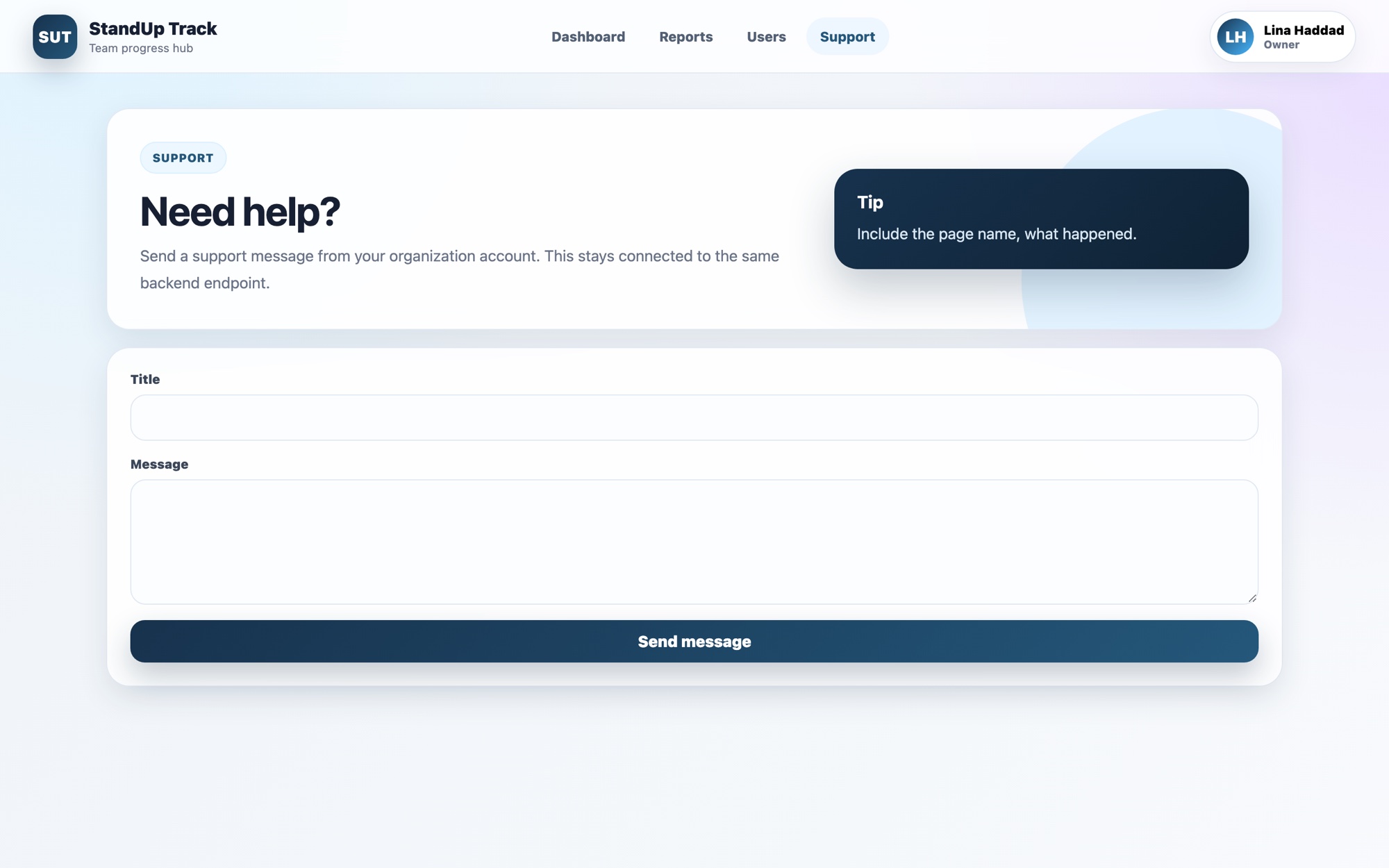
  • User management, profile, settings and support pages.
  • Push notification support built in (Firebase Cloud Messaging; needs a Firebase project to run).

How it's put together

  • Android: MVVM with data (local + remote), domain (models + use cases) and presentation layers, Hilt DI, Retrofit, and paginated lists.
  • Session and settings are stored in DataStore. Arabic localization and night mode are built in.
  • Web: one HTML, CSS and JS file per page, all calling the same REST API. The browser never touches the database.

Key engineering decisions

  • One backend API serves both clients, so business rules live in one place.
  • Use cases sit between ViewModels and repositories to keep screens thin.
  • When the backend has no reply endpoint, the web client saves replies locally and says so, instead of failing without telling the user.
invoice-audit · pipeline
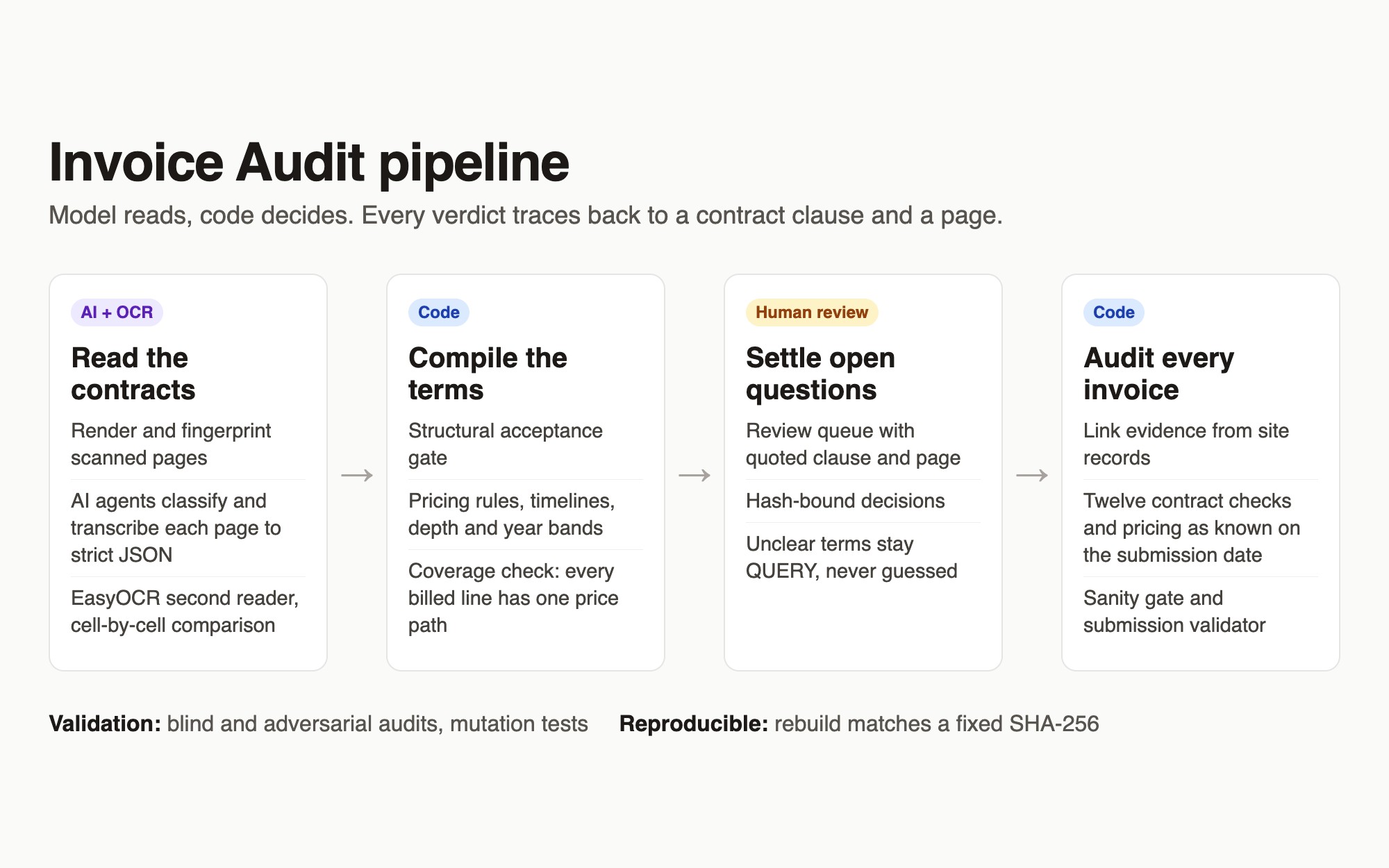
Invoice Audit pipeline: AI and OCR read the scanned contracts, code compiles the terms, a human review settles open questions, and code audits every invoice
03Team project · AI pipeline

Invoice Audit

AI-assisted contract & invoice auditing

A pipeline that audits 2,806 invoices against two scanned contracts and gives a traceable reason for every verdict. AI agents and OCR read the contracts once; deterministic Python makes every decision, with no model call at audit time.

PythonClaude Code agentsEasyOCRPyTorchPydanticpypdfium2pytestCLI
Reproducible: the rebuild matches a fixed SHA-256 Private repository

The problem

Thousands of invoices are billed against long scanned contracts with rate schedules, amendments and standby rules. Checking them by hand is slow and inconsistent, and an LLM that decides alone can't be audited.

My role

In a team project, I worked across the full system end to end: contract reading and OCR, AI-agent page extraction, the invoice-vs-contract audit logic, review decisions, validation and testing, and the final reporting and submission.

How it's put together

  • Reading: contract pages are rendered and fingerprinted with pypdfium2; AI agents classify and transcribe each page into strict JSON under versioned, hash-pinned prompts.
  • Verification: EasyOCR re-reads every pricing table as an independent second reader, and code compares the two readings cell by cell.
  • Rules: a structural gate, compiled pricing rules and contract timelines, and a coverage check that every billed line has exactly one price path.
  • Audit: evidence is linked from site records and daily reports, then twelve contract checks and pricing run as known on each invoice's submission date.

Key engineering decisions

  • The model reads and the code decides, so every verdict traces back to a clause and a page.
  • Questions the readers can't settle go to a human review queue; decisions are bound to the exact question by hash, and unclear terms stay QUERY instead of being guessed.
  • Validation: blind and adversarial audits, planted-error mutation tests, a sanity gate and a submission validator, plus 1,384 automated tests.
Experience

Where I've worked

  1. Android Developer

    Jun 2023 – Present

    InceptiCode · Canada (Remote)

    • Developed and maintained Android applications using MVVM architecture.
    • Configured and tested RESTful APIs using Postman.
    • Implemented Dagger Hilt for dependency injection, reducing boilerplate code.
  2. Android Developer

    Mar 2022 – Jun 2023

    Trend Integrated Solutions · Kuwait (Remote)

    • Collaborated with QA, iOS, Backend, and Web teams to deliver cross-platform features.
    • Resolved development tickets through cross-functional communication.
    • Contributed to improving product stability and user experience.
About

AI software engineer with Android roots.

Android Engineering

My foundation since 2022. I trained under industry professionals and write clean, maintainable Kotlin and Java: MVVM, SOLID, Hilt, Coroutines and Compose. I care about debugging, performance and shipping apps that hold up in production.

AI & Full-Stack

I'm an AI-driven software engineer who builds end-to-end solutions with Python, TypeScript, LLMs, and AI agents. I use AI-assisted development workflows to ship working products fast, from backend APIs and web apps to mobile clients and AI pipelines.

Atlas · StandUp Track · Invoice Audit
B.Sc. Computer Information Systems
The Hashemite University, Jordan · Graduated August 2025
Skills

Technical toolkit

The stack behind the projects above, from LLM pipelines and web backends to Android clients.

AI Engineering

LLMsAI AgentsPrompt & workflow designAI-assisted developmentOCR

Languages

PythonTypeScriptJavaScriptKotlinJava

Web & Backend

REST APIsKtorPostgreSQLExposedJWT authReactViteTanStack Query

Android

Android SDKJetpack ComposeMVVMCoroutinesStateFlowRetrofitDagger HiltSOLIDOOP

Tools & Platforms

LinuxGitGitHubPostmanJiraAndroid StudioGradleCloudflare Pages

Quality

API testingFunctional testingRegression testingBug trackingpytest
Contact

Let's talk.

I'm open to AI software engineering and Android roles, remote or in Amman. Send a message and I'll get back to you.